September 26, 2026 Burgos SP

We were drawn to Burgos because it is the home of El Cid. He is the great hero of Spanish arms; the rough equivalent of George Washington to Americans or Lord Nelson to the English.

This statue in the center of Burgos is dedicated to El Cid.

El Cid was a minor knight born Rodrigo Diaz in the village of Vivar near Burgos. Over time he rose to head the armies of Castile in wars against the Muslim rulers of Zaragoza. Despite being victorious in many battles after a change of rulers he fell out of favor and was exiled. In exile he became a mercenary general for the Muslim rulers of Zaragoza in their wars with the Berbers. Eventually he ended up again fighting for Castile and eventually ended up the ruler of Valencia until his death. Ton and I were familiar with him because of the movie El Cid from the early 1960’s staring Charlton Heston. It is also interesting that one of the national heroes of Spain fought for both Christians and Muslims during his life.

The crypt holding El Cid and his wife Jimena Diaz in the Cathedral in Burgos.

Our first stop in Burgos was at the beautiful Gothic Museum. We have visited a lot of museums in Europe, but this one impressed me. It is a beautiful building as most Cathedrals are, but what I really liked was how they gave you a structure to the visit. You were guided through the Cathedral like it was a museum.

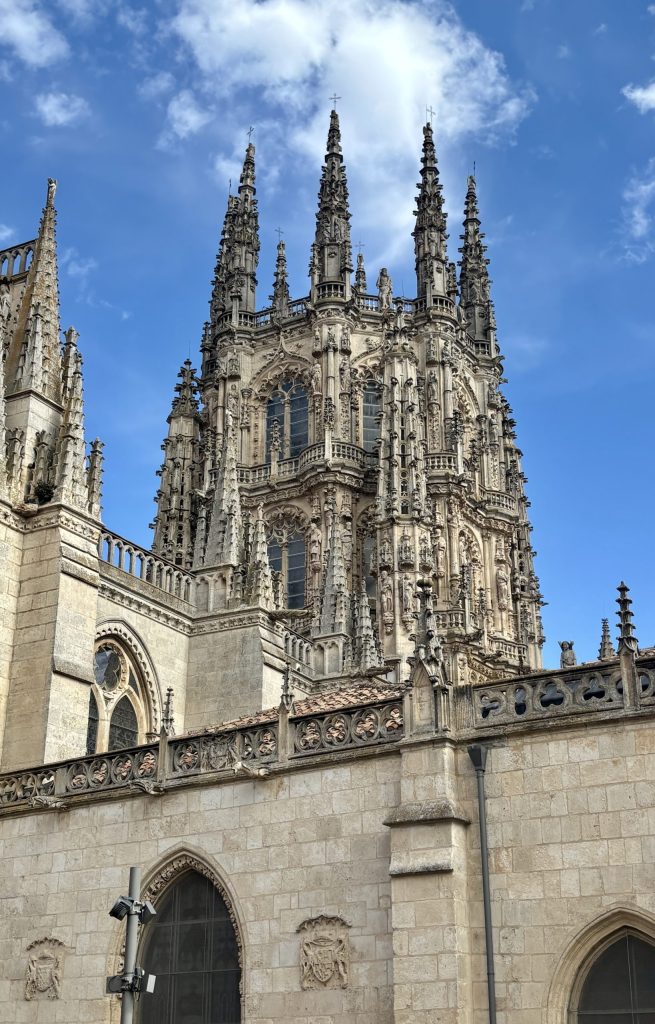
We were very impressed with the art work on the spires of the Cathedral.

You were routed in a very thoughtful way through the museum that gave me a much better understanding of the purpose of all the pieces that go into a giant building like this.

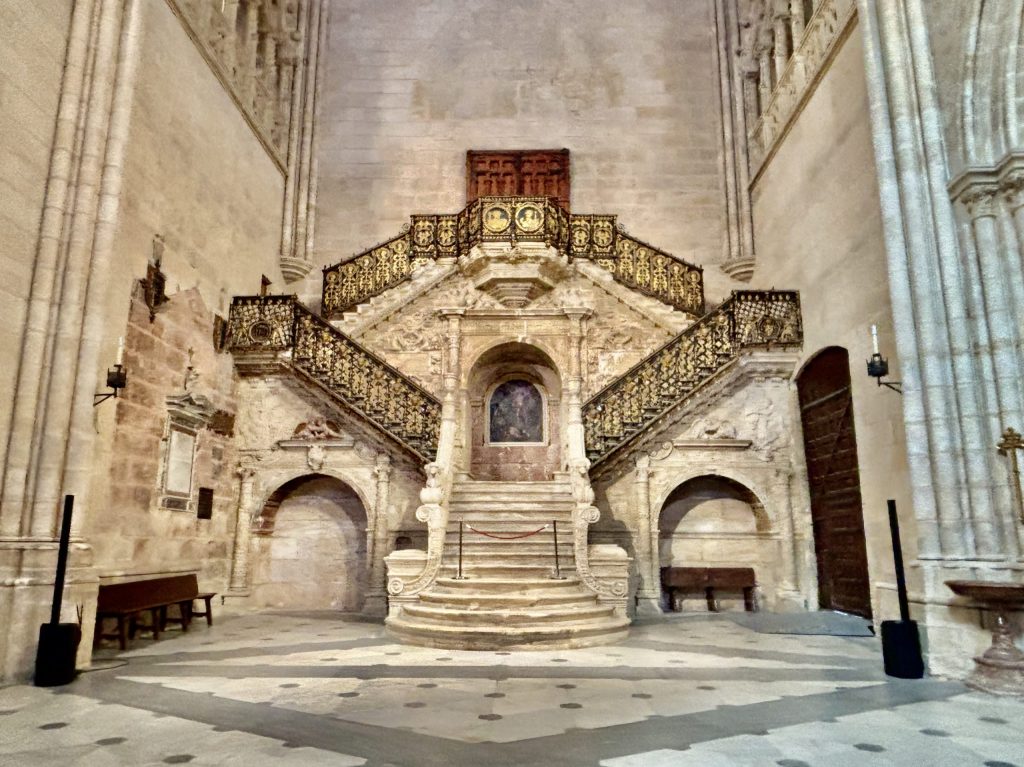
The golden staircase in the Cathedral.

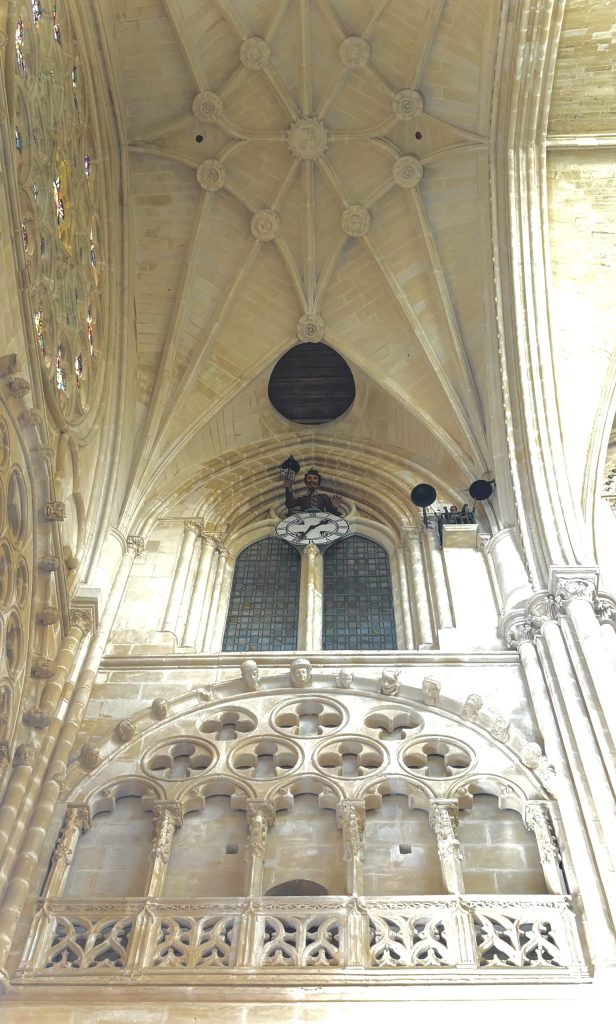
Ton gave me a list of 6 things that we had to find in the Cathedral. We found 5 of them on our walk, but we came to the exit without finding the “Flycatcher Clock.” Ton was bummed but I had an idea where it might be and took her around to the main doors of the Cathedral and there it was about 100 feet in the air on one side of the entrance. A small win for me.

The Fly Catcher Clock is right above the windows in the picture.

Having walked quite a bit to get to the city center, and then walked through the Cathedral for over an hour it was time for lunch. Ton had a tapas bar on her list and we were able to squeeze our way in and grab a table. Spain spoils you for food. We got two glasses of wine and 4 good sized tapas (one of which was a nice hamburger) for less than $20. Not only were they inexpensive but as usual they were delicious.

Part of our lunch.

Now with some energy it was time to tackle some more sightseeing. Ton mentioned the castle and I googled it and it was pretty close in distance. What it didn’t mention was the nearly 400 foot climb. After a tough climb we arrived at what can only be called the ruins of the the Burgos Castle. There were a few intact walls and a lot of scaffolding supporting ruins, the views from the height were good, but the building itself was a bust.

Coming down from the castle we found this beautiful street art.

By this time we were really beat from the climb and decided to head back to the campground, but the climb down took quite a while as Ton was drawn to quite a few beautiful photo opportunities.

There is a lot in this photo, a nice square, some interesting medieval buildings and the Cathedral.

I lost track of Ton twice on this walk as she took off after something that caught her eye. Luckily after years of doing this we have a sense of where to find each other when we get separated.

Burgos has many of these bronze statues of normal people doing normal things scattered thru the city.

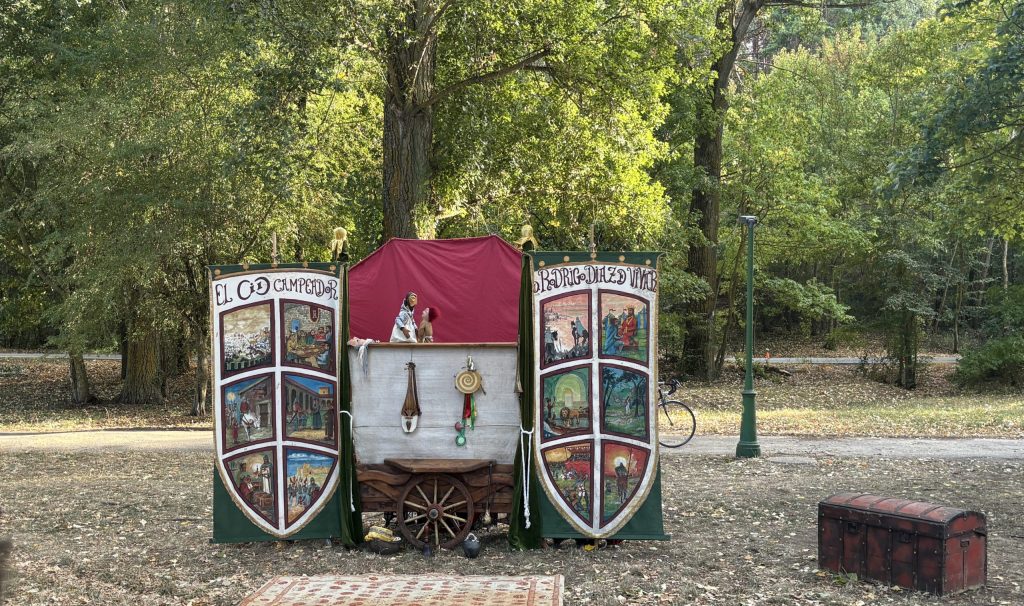
After a long day and over 7 miles of walking we got back to the campground only to find a Medieval Festival going full tilt just outside the entrance gates. We made a quick walk through the fair, it was nice and I enjoyed watching the knights hacking away at each other with blunted swords. But we were tired and decided to retire back to François for water and vermouth.

Part of the Medieval Festival going on outside the campground.

We liked Burgos, and at the end Ton suggested we extend our stay a day so we can take in more of the city tomorrow.

The main entrance to the Cathedral.

September 25, 2026 Burgos SP

Today we shifted regions from the Atlantic coast of the Basque country to the plains of Castile. The drive took us past the Costco in Bilbao so we swung in there to top off our fuel and buy some more food.

This mountain has been mined for a long time. The terraces run from the base of the mountain nearly to the top.

The first 1/2 of the trip was through mountains on a very good freeway. It was a pretty quick drive and we arrived at the municipal campground around 2pm. Rather than rushing into town we decided to do our laundry. After that we had dinner and relaxed.

A small village in the mountains.

September 24, 2026 Laredo SP

We have retraced our steps a little bit to visit Laredo. Last night we realized we had another month of free traveling and didn’t need to rush south. The coastal region we are in has several small towns that caught Ton’s eye so we decided to visit one.

An entry to the Playa Salve. The main attraction for Laredo.

We first considered visiting a small town called Santillana del Mar. We were intrigued because it is called the city of three lies, Santa in Spanish can be interpreted as holy, the city is not holy, Llana in Spanish means flat and the town is extremely hilly, del Mer means by the sea, and the town is not next to the sea. While it is pretty we decided to just drive through it rather than stop.

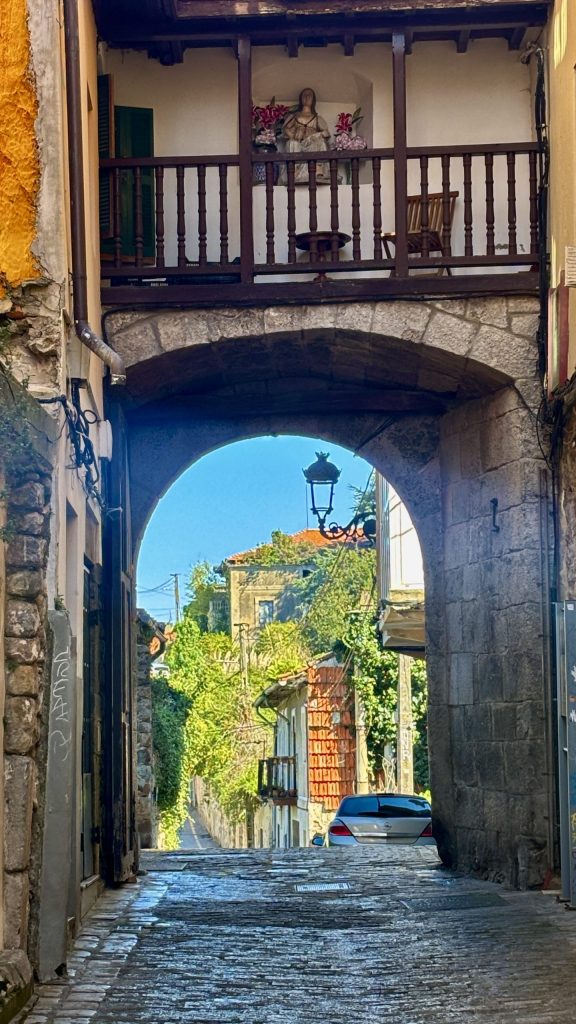
A cool archway in the old town of Laredo.

We turned up at a nice river side campground near Laredo. After setting up we took a little break before deciding to head into town. We have become big users of public transport in Europe and usually it is very convenient and inexpensive. But Laredo as we learned the hard way is the exception.

Another entry to the Playa Salve.

The nearest bus stop was 700 meters away and the bus ran once an hour. I put Laredo into google maps expecting it to give me the city center and it said it was 2000 meters. Two kilometers is usually the maximum length of our planned walks so I convinced Ton to walk instead of taking the bus.

The old town of Laredo much further than 2 kilometers from our campsite.

After about 35 minutes we arrived to what google said was Laredo and we were on a nondescript street surrounded by apartments. This was not the picturesque old town we were expecting. I found a restaurant that was in the old town and it turned out it was another 2 kilometers away. Ton gave me a bit of side eye and I deserved it, but we were now committed. We had never seen the one bus that is the municipal bus service for Laredo, google maps denied it existed and none of our ride share apps offered service. So we continued on foot. I told Ton we would find the bus when we got to the commercial district.

Laredo is famous for its Calamari.

We finally arrived at the old town. It was nice, but it is really important in Spanish cities to catch them in the middle of the day or the evening. From 3 to 6 pm they are kind of dead. We found a nice cafe that was open in the dead time and ordered the two local specialties Anchovies and Calamari. They were both excellent.

The old town was nice but it was siesta time and we nearly had it to ourselves.

After the restaurant we headed to the bus station where I hoped I would find the bus that was rumored to run to near the campground, or a taxi. The bus station was not for local traffic but for long distance buses; if there was a city bus I couldn’t find it nor could I find a human being to ask about local buses. Nor were there any taxi’s. At this point I told Ton our only option was a 4 kilometer walk back to the campground. She wasn’t happy with me, but she was a good trooper and set off. Just to rub salt in my wounds about 10 minutes from the end of our hour hike back to the campground the only taxi (I presume) in Laredo passed us on a dirt road we were trudging down.

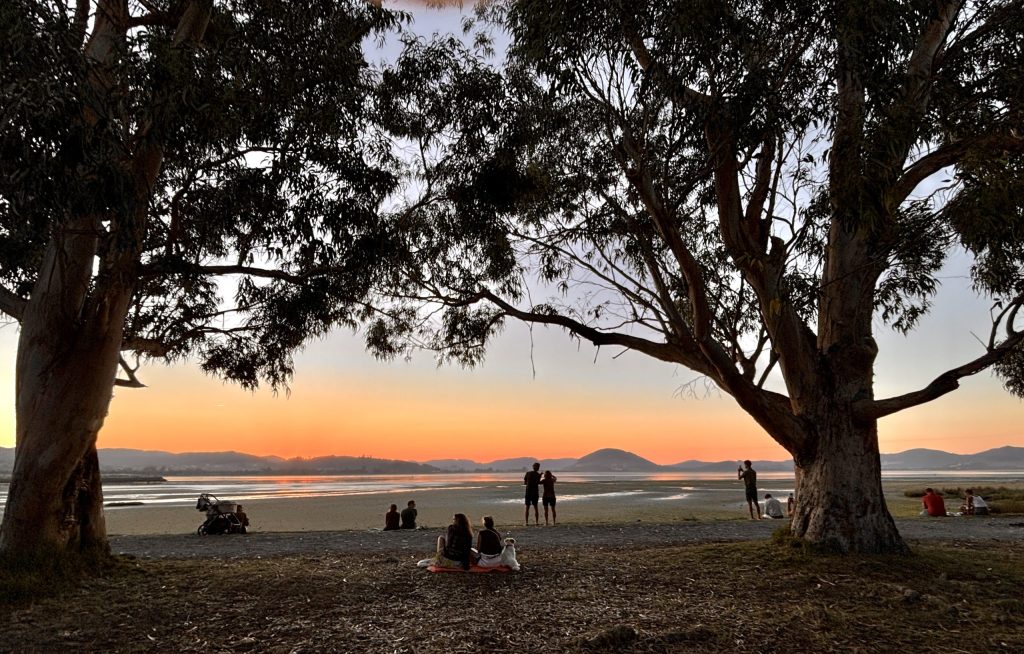
Sunset at the beach next to our campsite.

So Laredo didn’t make as good as impression on us as it would have if we could have cracked the code on transportation. But after we returned to François our Irish/Australian neighbors saved the day. We overheard them telling our British neighbors that the sunset was glorious on the beach next to the campground. So we headed over there at sunset and they asked us to sit down with them and share a glass of wine. It turns out they were celebrating there 40th anniversary and we were privileged to join them in the celebration. We had a wonderful hour long conversation about kids, traveling, and life that turned what had been a pretty mediocre day into a very good one.

September 23, 2026 Comillas SP

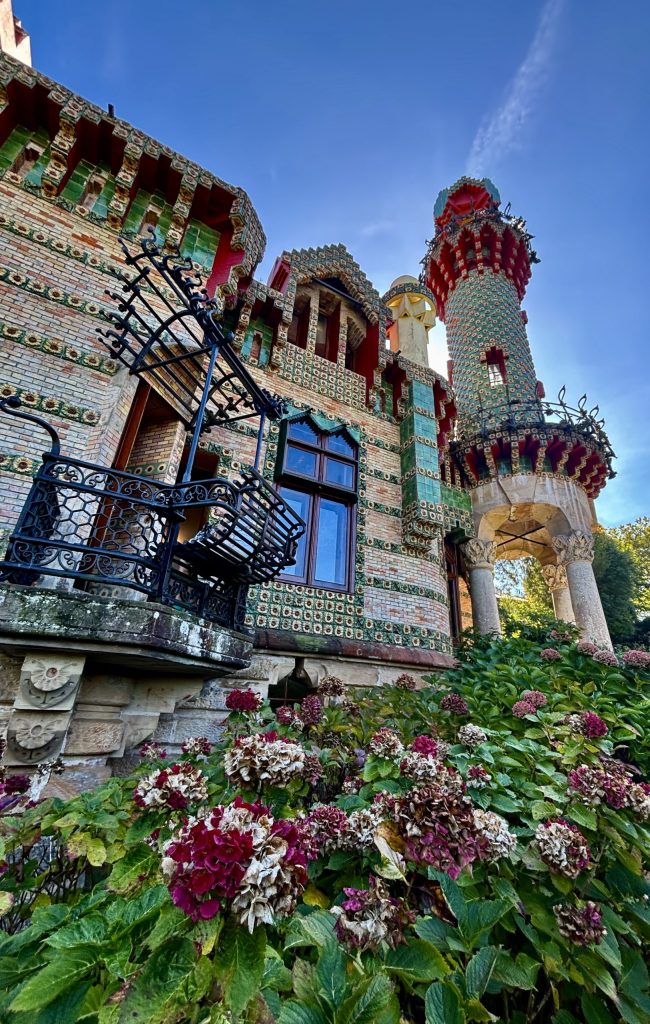
Early in the trip Ton handed me a list of places that she wanted to visit in Basque Country, and Comillas was underlined. Comillas is a small town on the coast with a beautiful beach and a quaint town center, but what made Comillas a must see for Ton was a very accessible home designed by Gaudi.

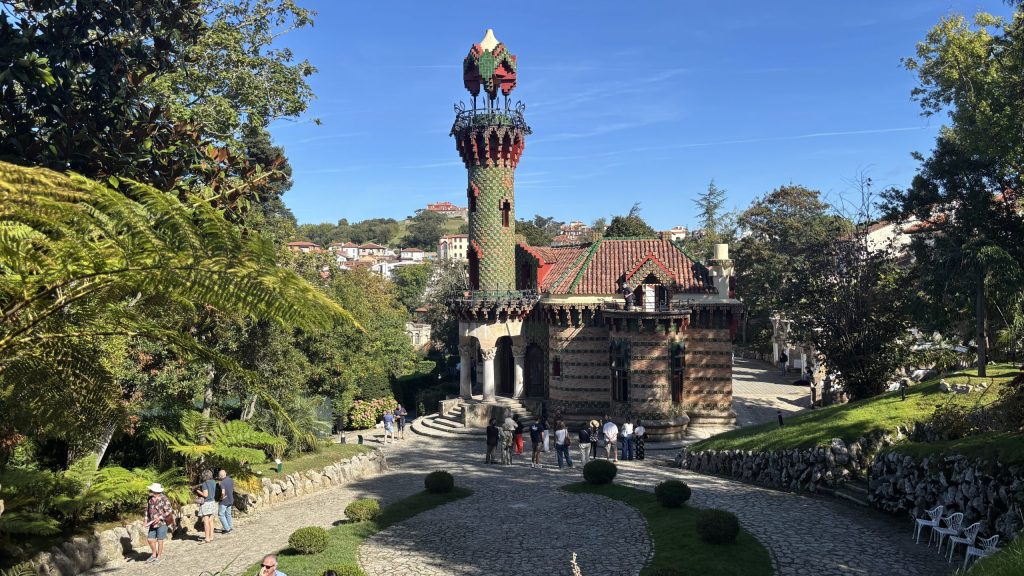
El Capricho de Gaudi. In English the Whim of Gaudi.

We are both fans of Gaudi and really enjoyed the Sagrada Familia when we visited Barcelona. We also walked past several of his other designs in Barcelona. The El Capricho is the first design beside the vast Sagrada that we were able to see the interior as well as the exterior.

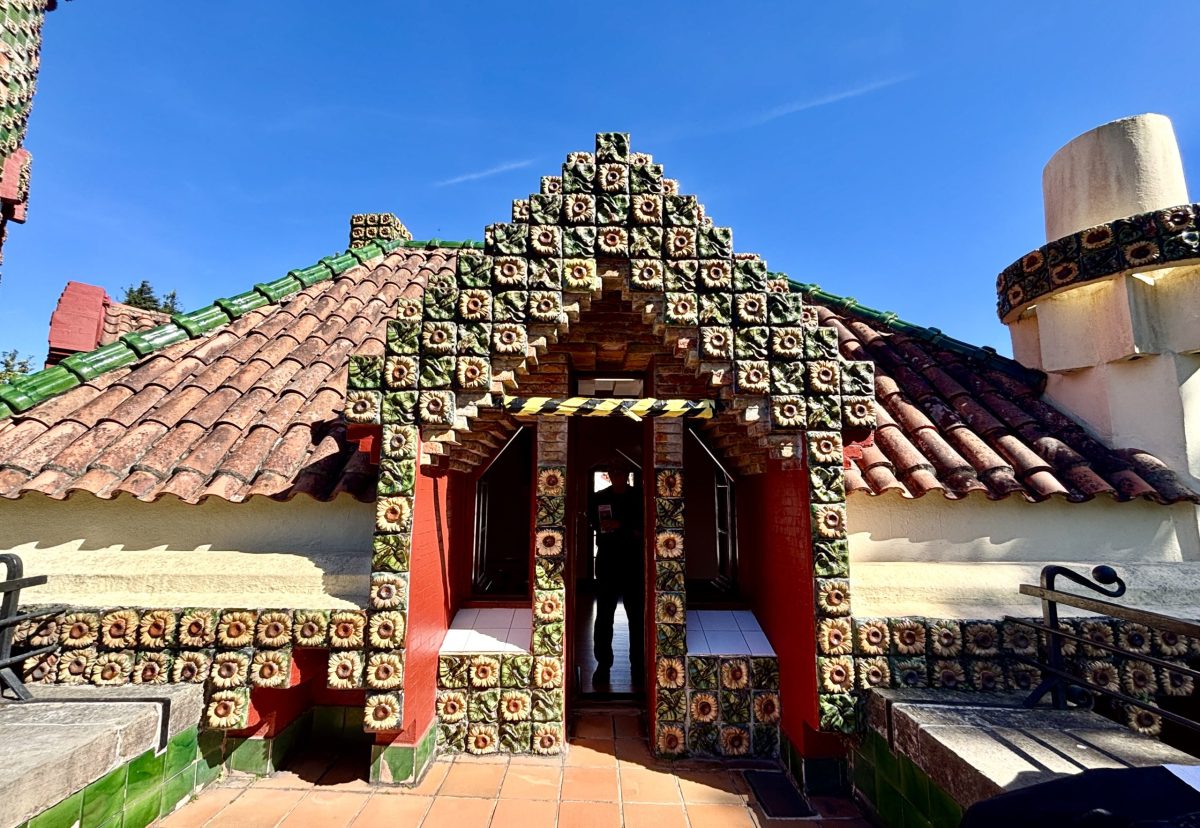
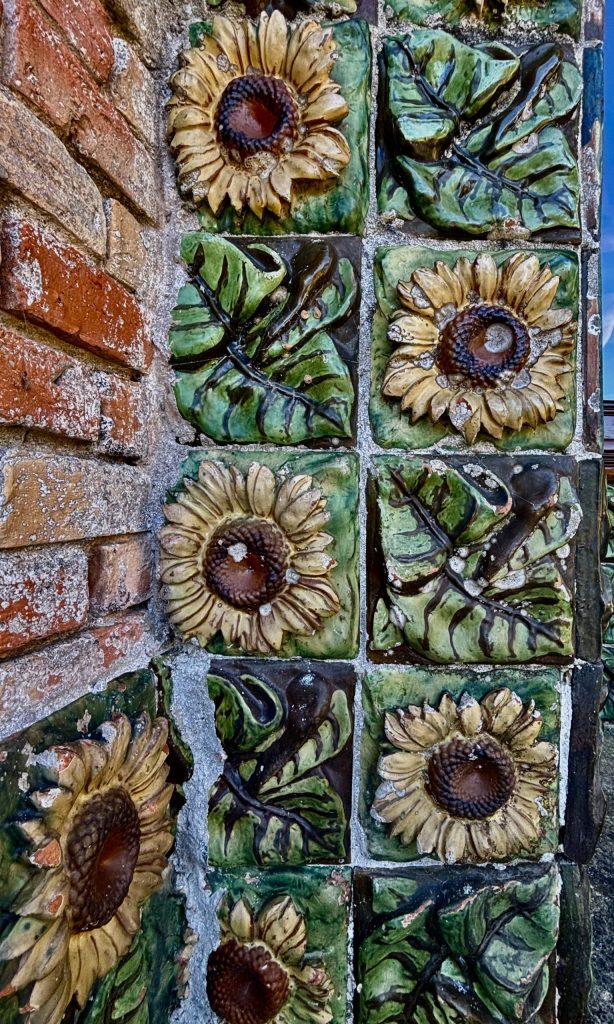
The home is also called the sunflower house as ceramic tiles depicting sunflowers are used to break up the bricks that the home is built with. There are hundreds of tiles of sunflowers on the exterior walls as the person that commissioned Gaudi to build the home loved sunflowers.

Gaudi was commissioned to build the home by Maximo Diaz de Quijano who was a prominent lawyer and amateur musician. Diaz de Quijano was impressed with Gaudi’s vision of a more natural architecture with high craftsmanship in all details of the home.

A focus on nature and craftmanship on one of the wall sconces.

The flow of the rooms reflect Gaudi’s belief in working with nature. The bedroom faces the sunrise, and the rooms flow with the sun through the day. The office is next to the bedroom, the living room is sited to take advantage of the afternoon light, and this being Spain the dining room was sited to take in the sunset.

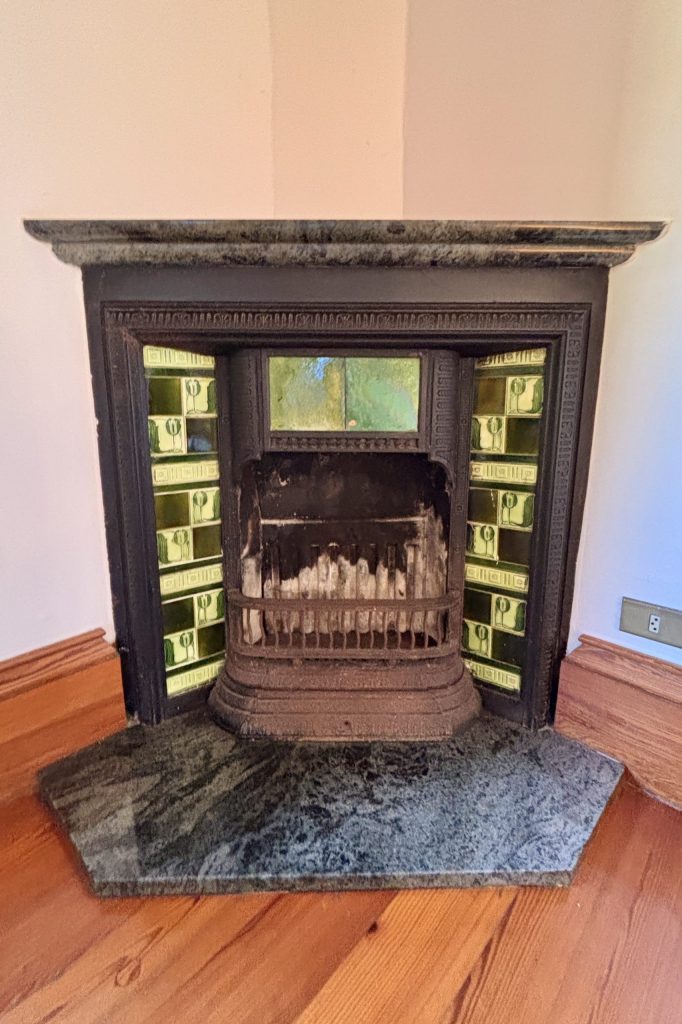
Each room had a beautifuly built fireplace in it.

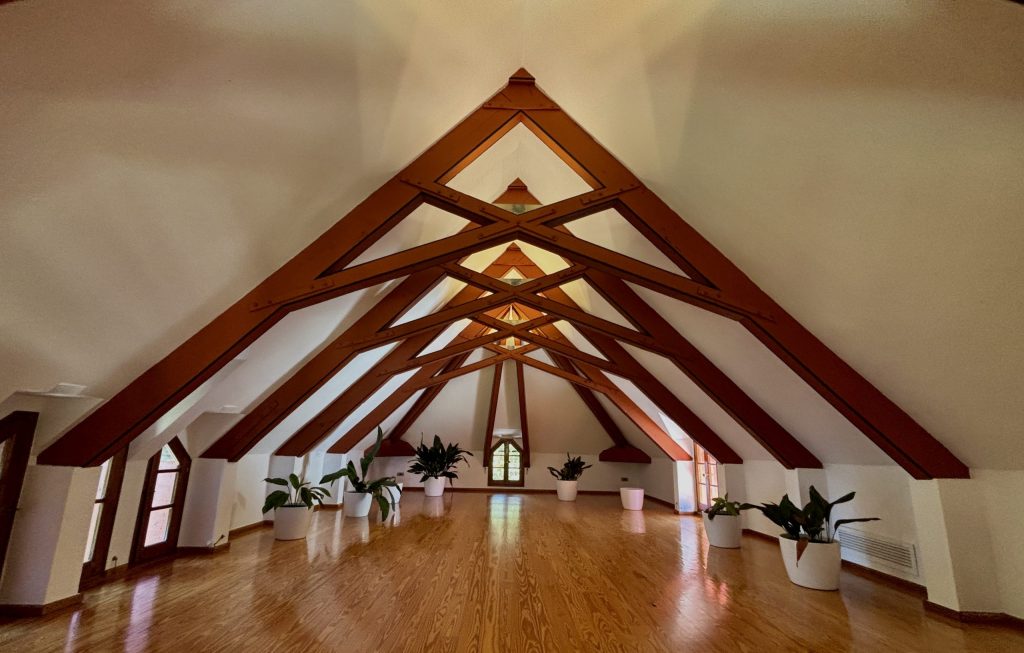
The main floor rooms are well crafted and solid reflecting the social status of Diaz de Quijano. But the for me the more interesting and beautiful rooms were those in the attic where the servants lived. They have an airy and open feeling that I appealing .

This area was probably the sleeping area for the servants. The a frames and the light colored wood really make this space more airy than you would expect in an attic.

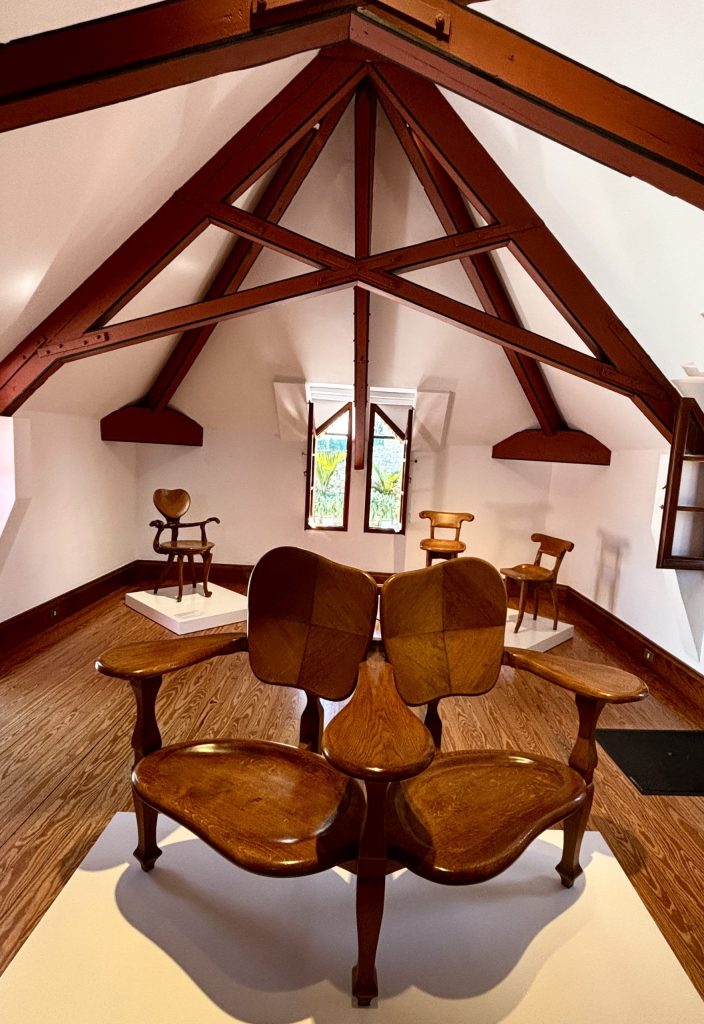
Gaudi also designed furniture and the home was full of examples of his designs for chairs. They also have flowing lines and references to nature.

This couples chair has seat backs shaped like apples.

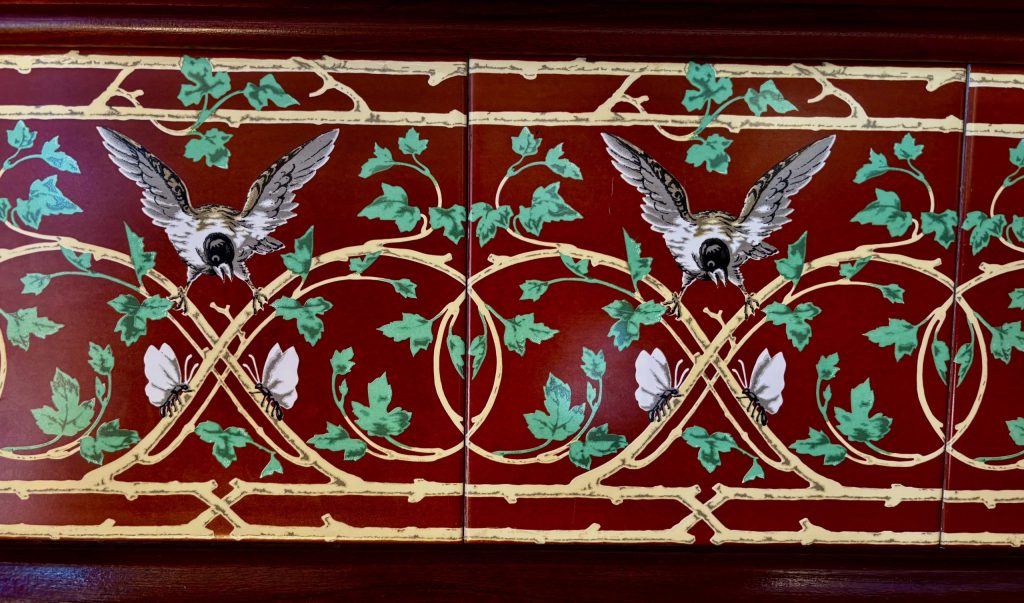
There were little touches and whimsies throughout the house. Stain glass widows depicting birds, the railing on the watch tower made of wrought iron treble clefs in reference to Diaz de Quijano’s love of music.

The wrought iron railings and benches on the porches are a tribute to Gaudi’s father who was one of the leading produces of iron in Catalonia. Also I like the way the colors of the home blend with the colors of the flowers in the garden.

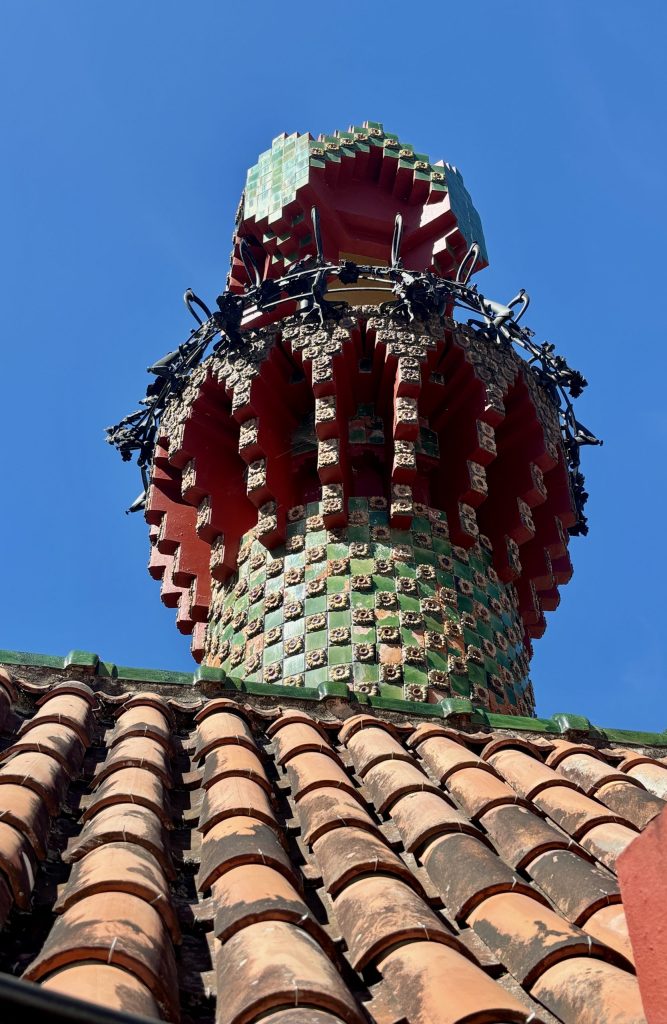
The final piece that really makes the home stand out is the watch tower that is designed to look like a Persian minaret. I don’t think there is a practical purpose to it, but it makes the home stand out from it’s neighbors.

The minaret that tops off the house. Covered in sunflowers of course.

Gaudi also designed the gardens to go with the home. He included a man made grotto and a horsehoe shaped front garden. The plants in the garden were designed to blend with the colors of the home.

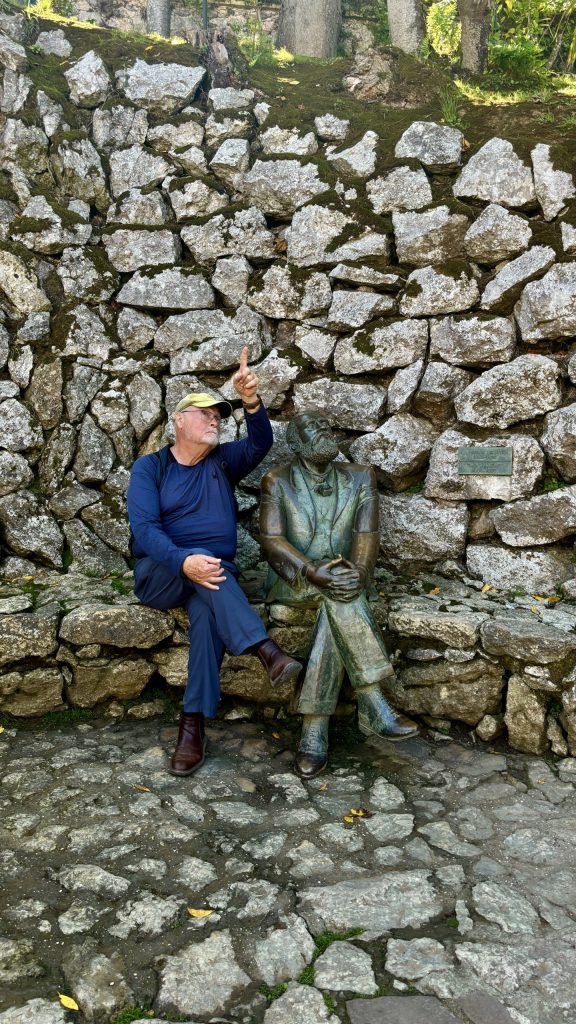
Giving some advice to the architect.

The building went through some ups and downs in its history. The Diaz de Quijano family sold it after about 50 years. As you can imagine the upkeep was immense on the home, and over time it became run down. By the late 1960’s it was in danger of being torn down. Fortunately an owner was found who converted it into a restaurant that kept the building afloat for about 20 years.

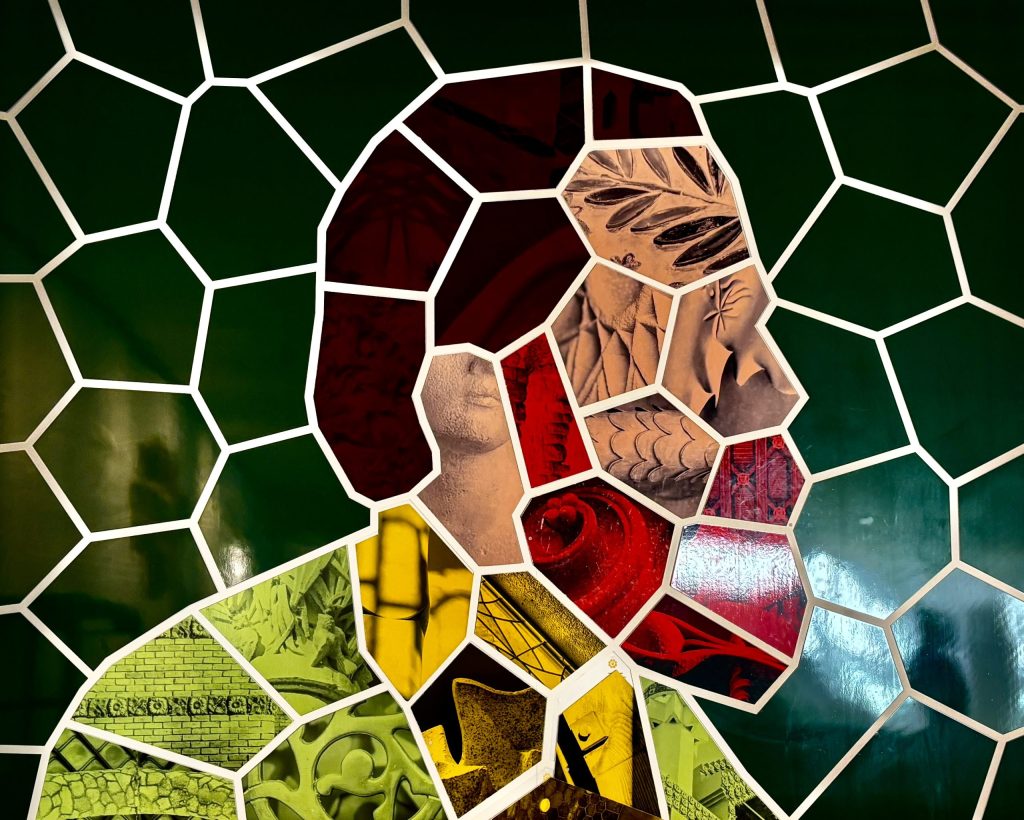
A stained glass window of Gaudi.

The current owners purchased it when it was a restaurant but decided that it was not an appropriate way to maintain the building. Their intent is to restore it to its original build. It was not as easy as you would think as the original design documents were destroyed. A team studied written accounts and photographs to try to understand the exact layout and today’s museum reflects that research.

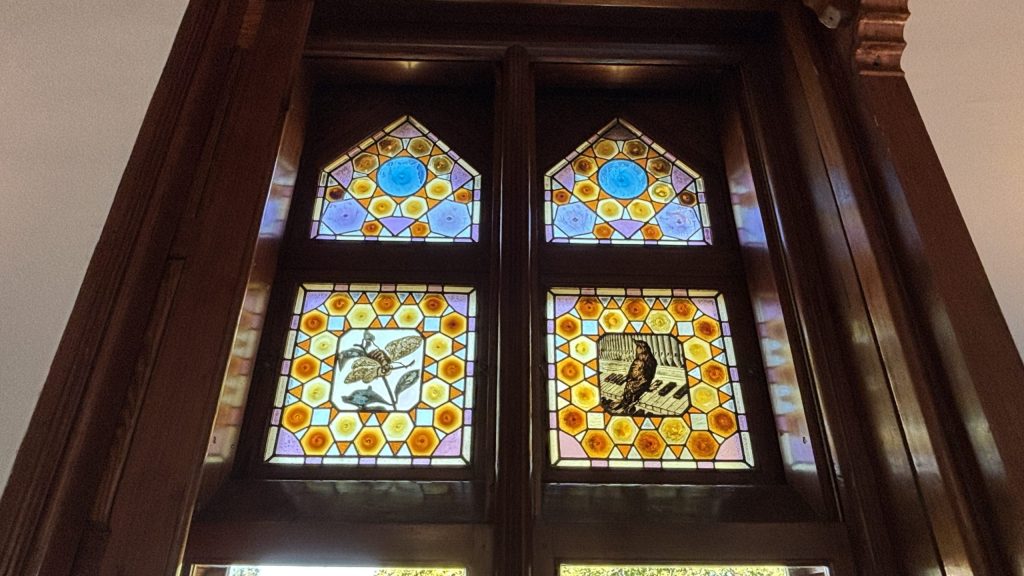
These stain glass windows with the bird playing piano are from the bathroom.

To get to the museum we had a pretty good hike as we opted to save money by staying in an aire outside of town rather than the campground on the ocean. As a result we got to enjoy Comillas in its entirety.

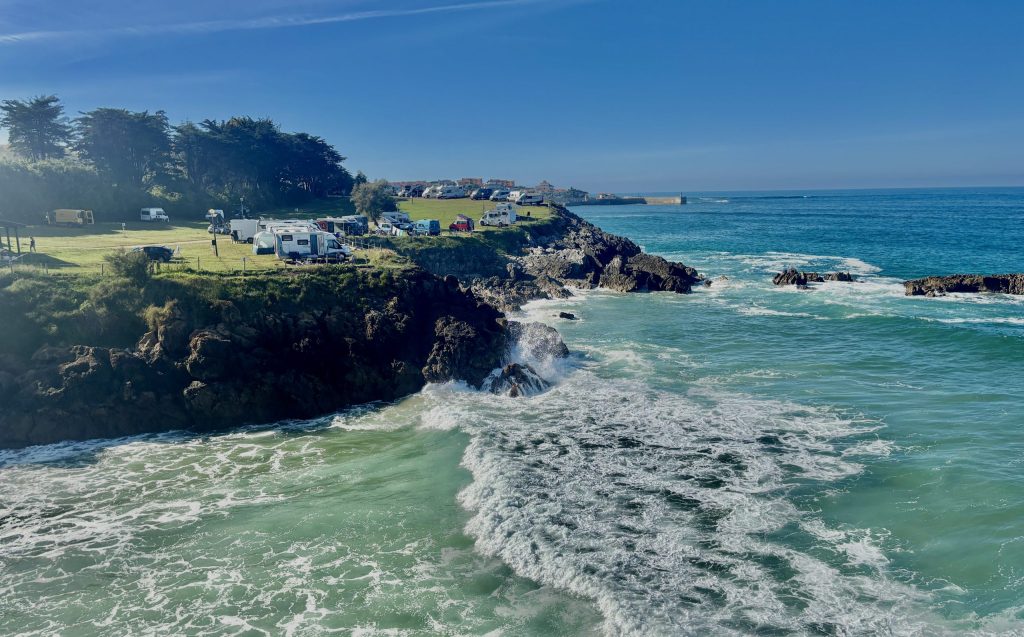
This is the campground we choose not to stay at. But, we saved €30 but our view is of an apartment building and a highway.

Comillas is a very nice town with a sleepy feel to it. But that may have been because we were there during the siesta. It may be quite lively at night.

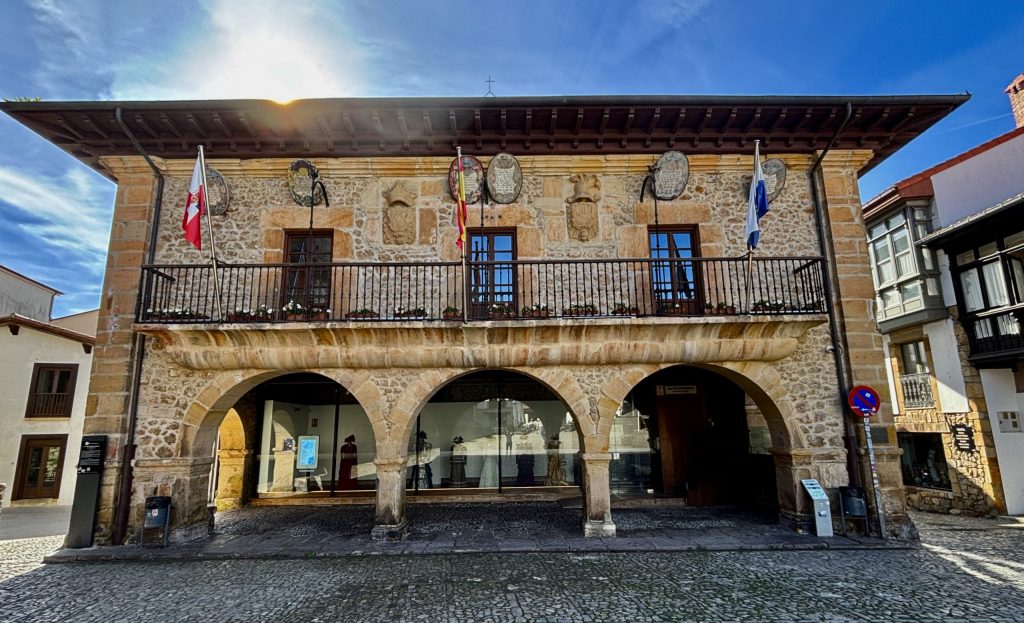
This was the original town hall but is now a city museum.

September 22, 2026 Bilbao SP

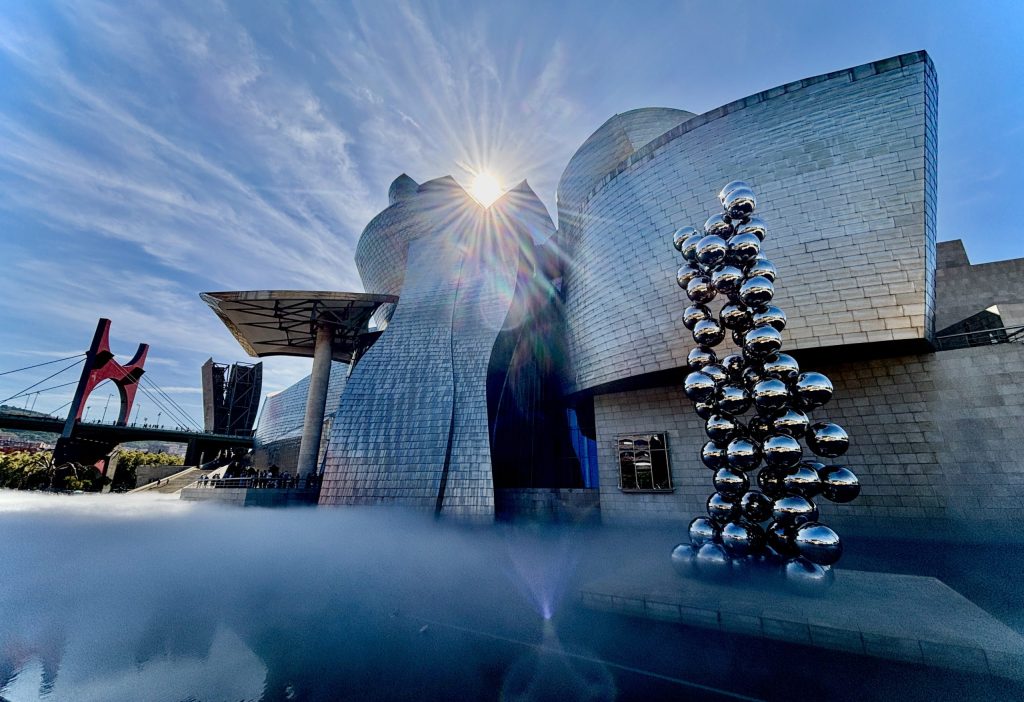
Before 1997 Bilbao was known as the steel city of Spain. In the 1990’s the city was trying to find a way of participating in the booming tourism scene in Spain so they told the Guggenheim foundation they would fund a museum of modern art in Bilbao if the family would help develop it. In 1997 the Guggenheim museum was opened to the public.

The fog fountain on the exterior of the building.

Initially there was some negative reaction to the Americaness of the project. The Guggenheim’s are American, and the architect for the project was also American. But the finished building is strikingly beautiful, and the art inside curated by the Guggenheim foundation is drawing large crowds.

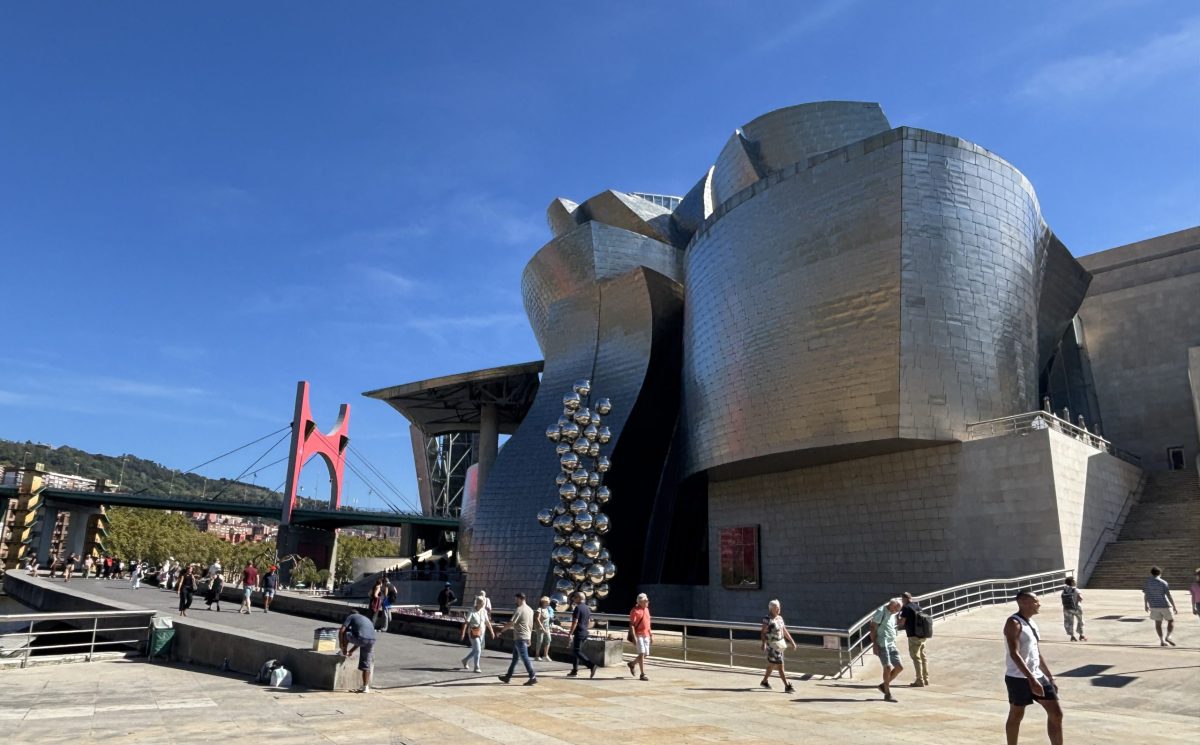
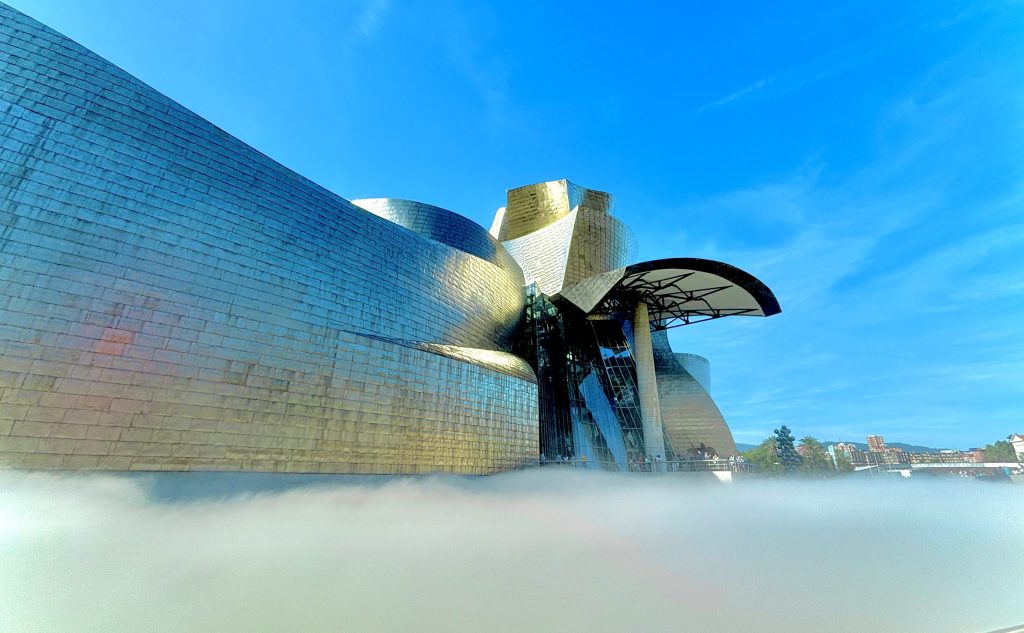
The exterior of the building is covered in titanium. Which seems appropriate given Bilbao’s history as a center of metallurgy in Spain.

We walked around the building taking in the exterior which is flowing and non-angular. The titanium exterior changes colors based on the natural light and contributes to the natural feel of the building.

There are several sculptures on the outside of the building including this giant spider.

The last feature on the exterior is a giant topiary designed by another American of a dog. It is not a serious piece of art but blends in well with the sense of the building.

This giant topiary of a dog sits at the entrance to the museum.

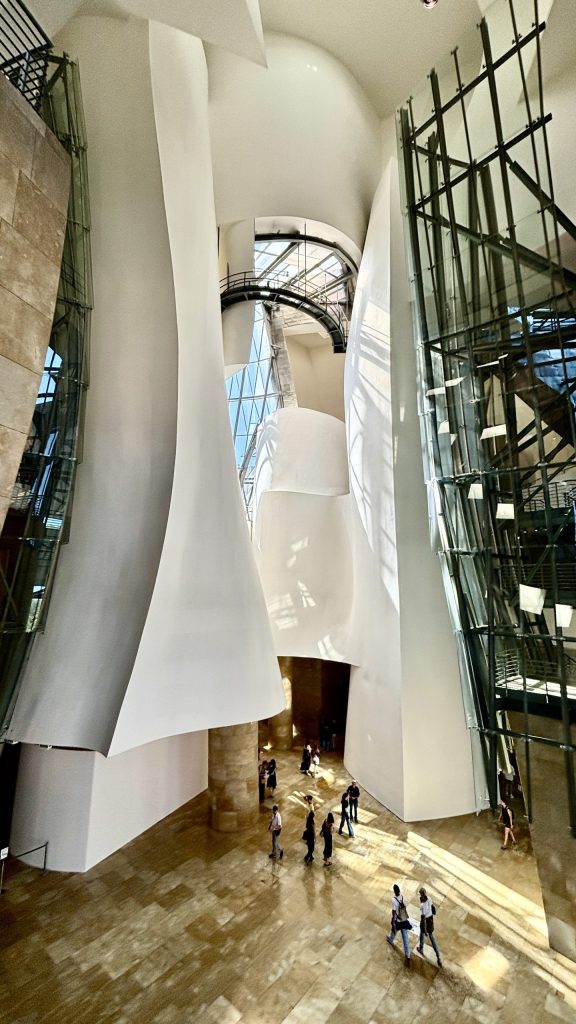
When you enter the museum you are greeted by an immense atrium that goes up over 150 feet. It is a mix of metal and glass and feels like it is cascading down from the ceiling.

Looking down from the top of the atrium to the main floor of the museum.

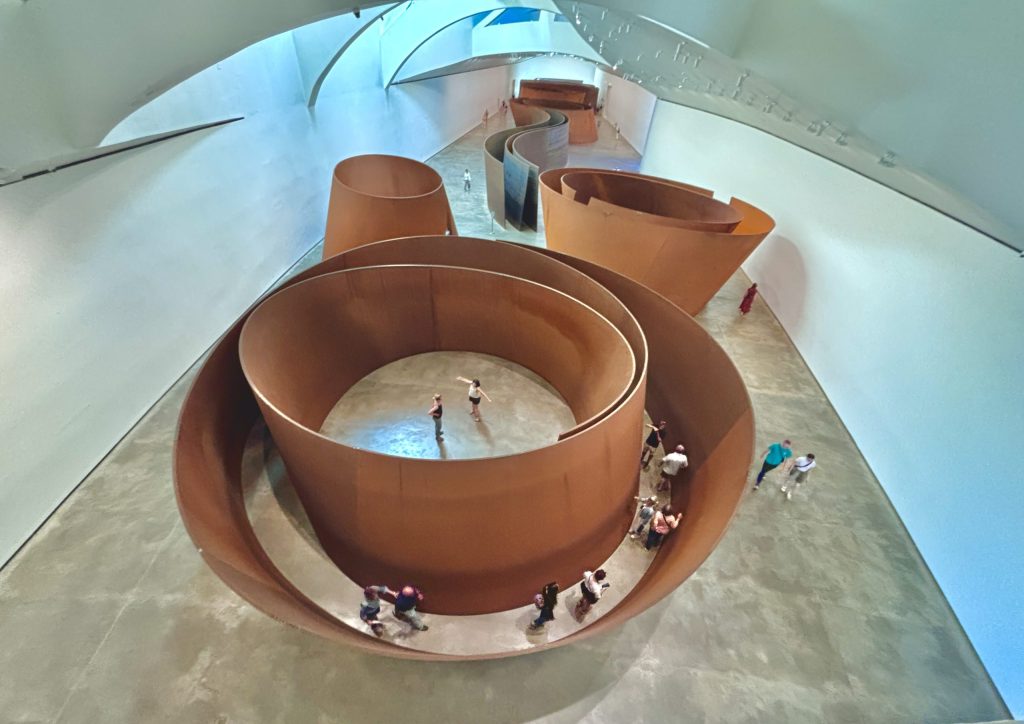
The building is a work of art in itself. Inside are permanent and rotating exhibits reflecting its focus on contemporary art. On the first floor is a giant hall of steel plate structures that is both simple and moving. One structure is a circular path that ends in an empty place that struck me as whimsical. You keep walking expecting to be rewarded at the end, but the reward is in the journey, not the destination. It seemed appropriate to our life as long term tourists.

This circular structure leads you to an empty hall in the middle.

There are several more of these steel structures with different shapes and stories. At the end there was a video showing the shaping of the steel plates on a giant press that may have been used to make steel forms for ships or other large structures. Besides being beautiful it paid homage to Bilbao’s history.

A painting by Jasper Johns based on the map of the United States.

The main traveling expedition was a retrospective on an American painter name Jasper Johns. There were well over 100 of his paintings and sculptures displayed. It is obvious that he was a very talented artist. The paintings were interesting and the craft that went into the execution was superb. I enjoyed exploring his works though they did not capture my imagination.

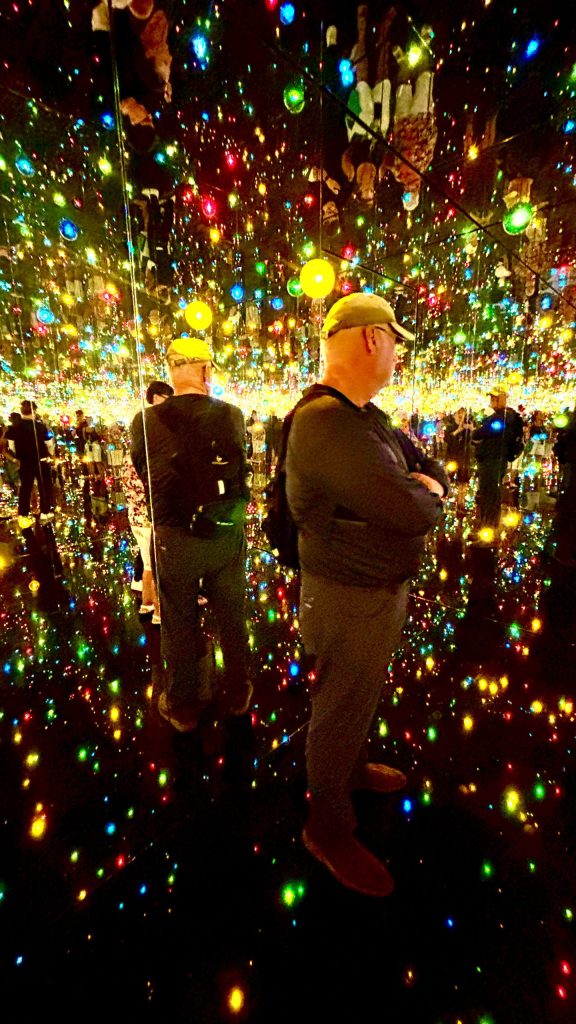
This was part of an immersive art experience designed by a Japanese-American artist.

We spent several hours going through the museum. It is an amazing place and is now visited by millions of people each year. The museum did put Bilbao on the map as more than a steel town.

Bilbao has an interesting architectural style with lots of apartments with wooden or cast iron balconies. The more we looked, the more we liked the “feel” of Bilbao.

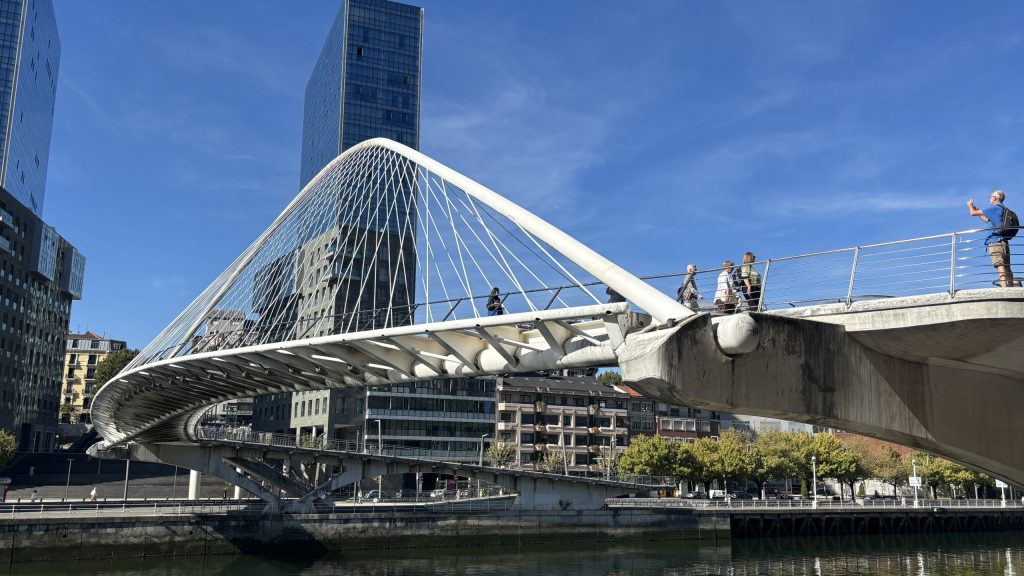
On the way to the museum we intentionally took a long walk along the Nerbioi River that splits the old town, and the Abando district. As we spent more time strolling along the river the town won me over.

These buildings facing the river each had a very different kind of architectural theme. We don’t know if they were or it just worked out that way. Either way we enjoyed it.

The walk convinced me that my negative impression of the city yesterday was wrong. The longer we walked the more charmed I became. What I really liked was how well blended different architectural styles and eras were blended together. It was not a monolithic city but one with a fun diversity of styles.

Bilbao has a very wide range of architecture from the 19th, 20th and 21st centuries.

After the Guggenheim we had some more excellent Pinxtos at a nice old bar in the commercial district of the city. Ton has been trying to find Txangurro crabs since we arrived in Basque country. Today we finally did and the Pinxto made from them was delicious.

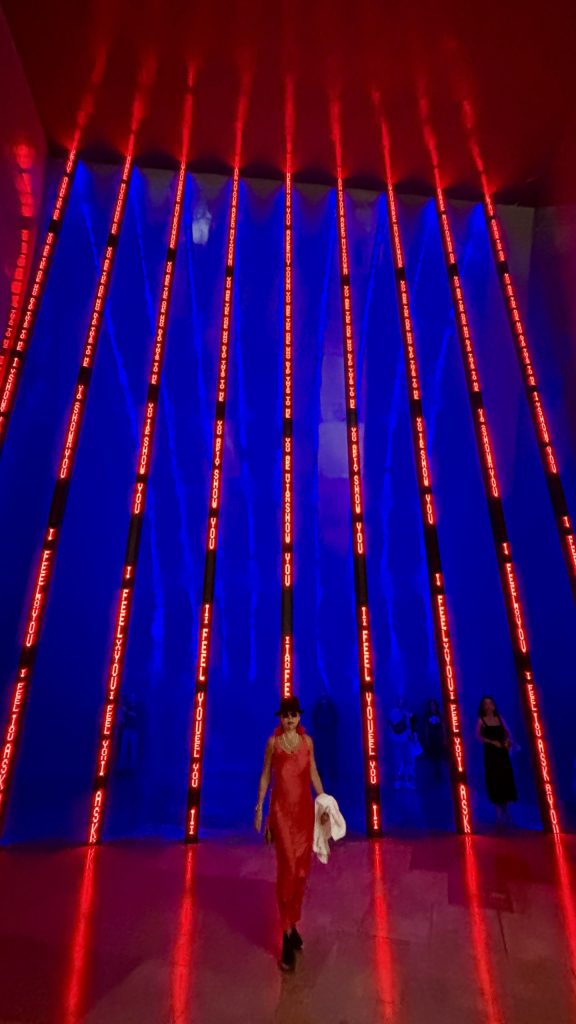
Another exhibit from the Guggenheim.

September 21, 2026 Bilbao SP

After 3 aborted attempts to visit Bilbao we were determined to finally see it today. Armed with the location of an aire that doesn’t take reservations we left early from Vitoria. But Bilbao has a Costco so we took a chance on getting into the aire, to stop there first.

The center of Bilbao with a large Basque flag.

For the first time this trip we paid less than €2.00 per liter (very approximately $10 per gallon), substantially less in fact. That alone made the stop worthwhile. Than we spent an hour inside debating what would fit in François tiny fridge and cupboards. It is always a frustrating experiencing having to leave some very delicious looking things behind because they are too big to fit.

Walking in the old town of Bilbao.

We finally headed up to the aire which has a spectacular view of the city from above. We pulled up and were assigned a space right away. We were planning on spending 3 days here, but were told there was a 48 hour limit. So instead of relaxing for a couple of hours we headed straight into the city.

The main market in Bilbao is an art Deco beauty which is the second largest indoor market in Europe.

Whenever there is a market to see it will be one of the first places we will go in the city. We arrived a little late and most of the food stalls had closed. The building itself was fun to explore and we really liked the stained glass windows on offer.

You would expect to find this stained glass in a Cathedral, but this one was in the market. The buildings are the apartments across the street.

The food hall was still open so we checked it out and planned the rest of our stay here. We didn’t eat, but shared a table with a young couple who raised their glasses in toast when we sat down.

A hipster take on pinxtos.

The main thing we accomplished at the market was to purchase our tickets for the Guggenheim museum for tomorrow. Ton then identified a couple of key points of interest for me to punch into maps and we were off on our walking tour of Bilbao.

A narrow ally in the old town.

Bilbao has historically been one of the main industrial cities in Spain. You can see that this is a city built on making things. The center of the city is gentrified, but the rest of the city retains its industrial feel. It is the largest city in the Basque country and is very proud of its heritage. In fact the local soccer team only recruits players from the Basque country or of Basque heritage from overseas. Luckily for them Basques make good soccer players and they are competitive in the Spanish league.

An enigmatic piece of street art.

We enjoyed our walk through Bilbao, but our travels have taught us that we like small towns and medium sized cities better than big bustling cities. Bilbao is a little on the large size for us.

We didn’t identify this imposing building, but it looked important.

After a few hours exploring Ton asked how far to the nearest bus stop and I pointed across the street. I checked the schedule and the next bus was in two minutes, so our first day in Bilbao was a few minutes shorter than planned.

September 20, 2026 Vitoria SP

We had no expectations about Vitoria. We picked it because we were looking for a place to wait for a day before we head into Bilbao. Ton read somewhere that they had the best preserved medieval center in Basque country, so we decided to check it out today. I almost waived off Vitoria because it doesn’t have a campground, but the city provides two aires that were both well reviewed- so Vitoria was on.

A major battle was fought near Vitoria during the Napoleonic wars. This monument celebrates the battle.

Vitoria made an interesting first impression. The road to the aire was a wide boulevard with trees down the middle. The apartments and offices on either side looked like they had been built in the last 20 years and had interesting designs that suited our taste. It did not look like the medieval city we were expecting. It made a good first impression on us because it was not what we were expecting.

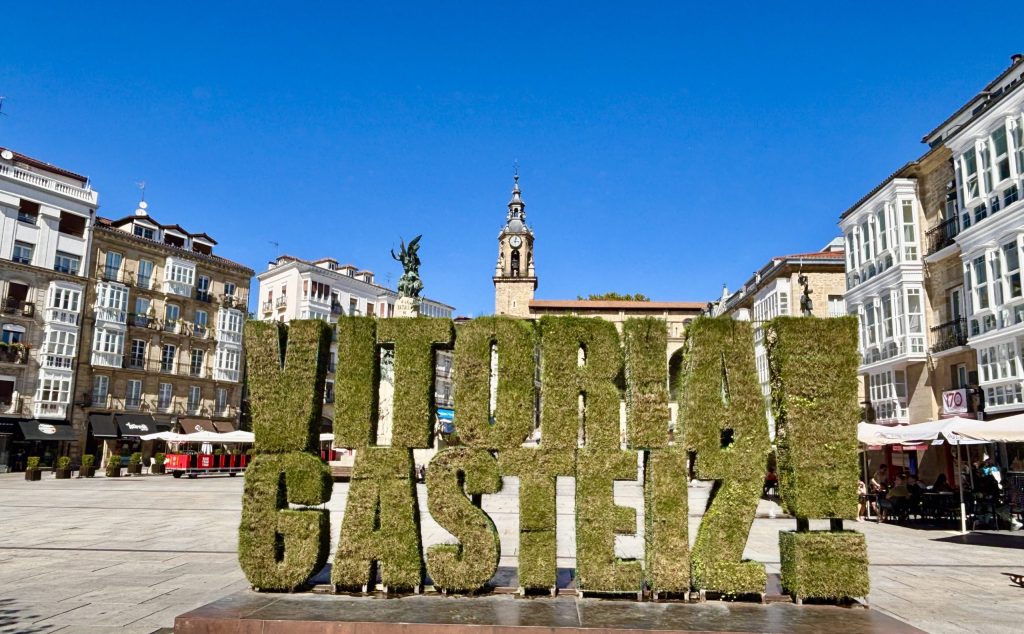
The Instagram spot that every city seems to have to have these days. This one was a topiary.

The Autocaravanas Parking occupied one end of a municipal parking lot as is common in Europe. It requires a small fee to use and we pulled up to a barrier that we had to negotiate. A quick look showed that it required an app, I downloaded the app and put in the usual information, the last step to activate was for them to send a pin by text. I never got the pin. I tried several times but could not get the pin. While I was troubleshooting this I had a French lady come over and pepper me with questions (in French) while smoking, she didn’t hear my apology for not speaking French the first time so the questions kept coming while I messed with the app. The second time I broke out my “Sorry I am American and don’t speak French” in French, she understood and looking disappointed wandered off.

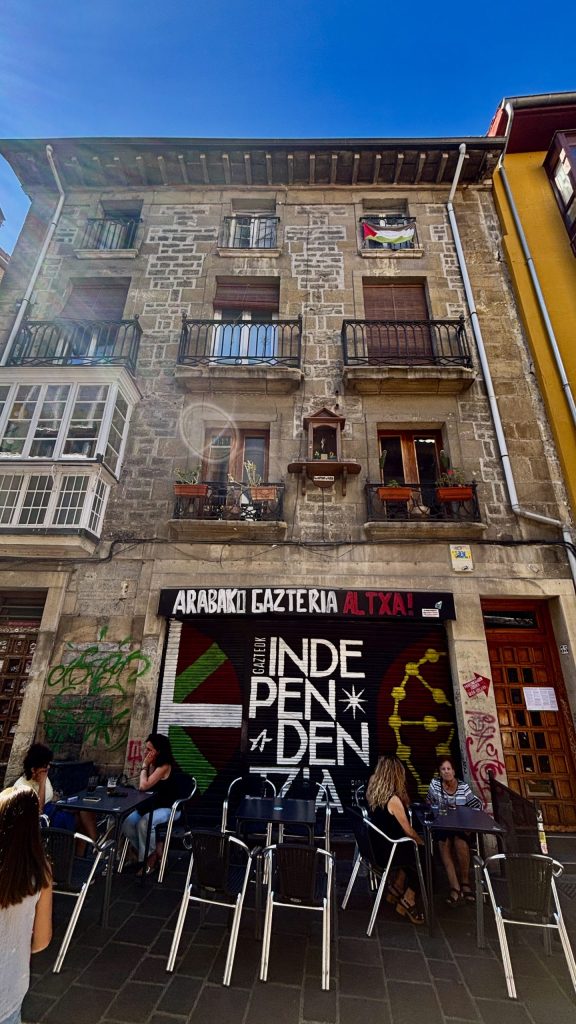
Anti-NATO painting in the city.

After another 15 minutes of Ton and I using both of our phones to try to gain entry, and sending a whatsapp to the app developer we finally got the pin we needed to pay the aire. The problem turned out to be our US phone numbers as the app doesn’t want to pay international text rates.

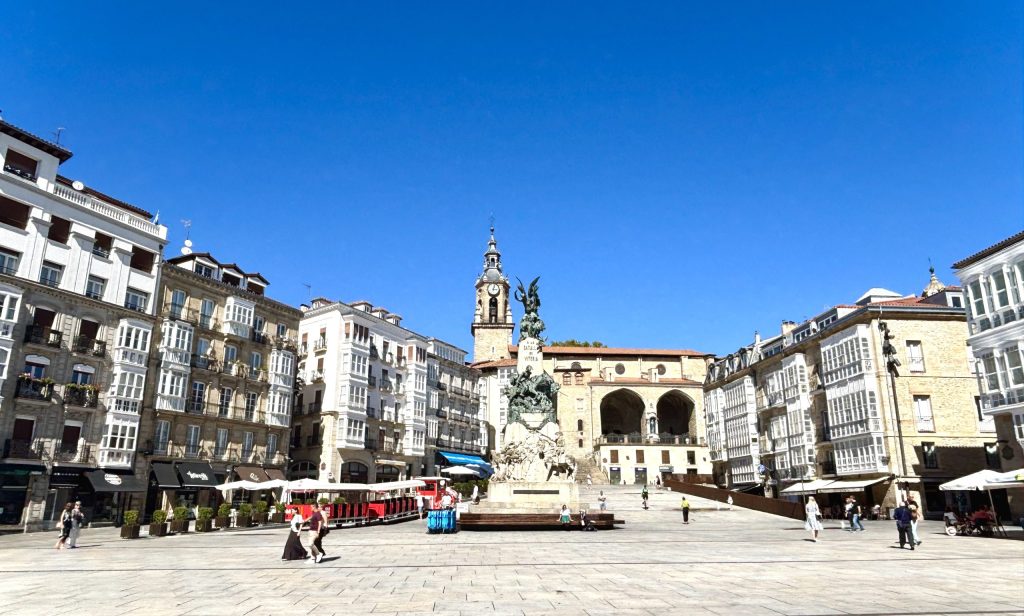
There’s a lot in this photo, in the foreground are the footings of the old city walls, in the middle is some modern street murals, and in the background is the tower of the Church of the White Virgin. This picture captured Vitoria for us.

Having conquered technology we decided to head into the city for the afternoon. We arrived at the tram spot just as the very sleek and modern tram pulled up. These days most trams and buses have pay stations on them so I told Ton to hop on and I went looking for the pay station. It turns out this time Vitoria is bucking the technology trend and still requires paper tickets you purchase before you get on. So now we were scofflaws. Fortunately the ticket police didn’t check and we got away with it while feeling guilty.

You can get a feel for the steepness of the hill by looking at the street against the buildings.

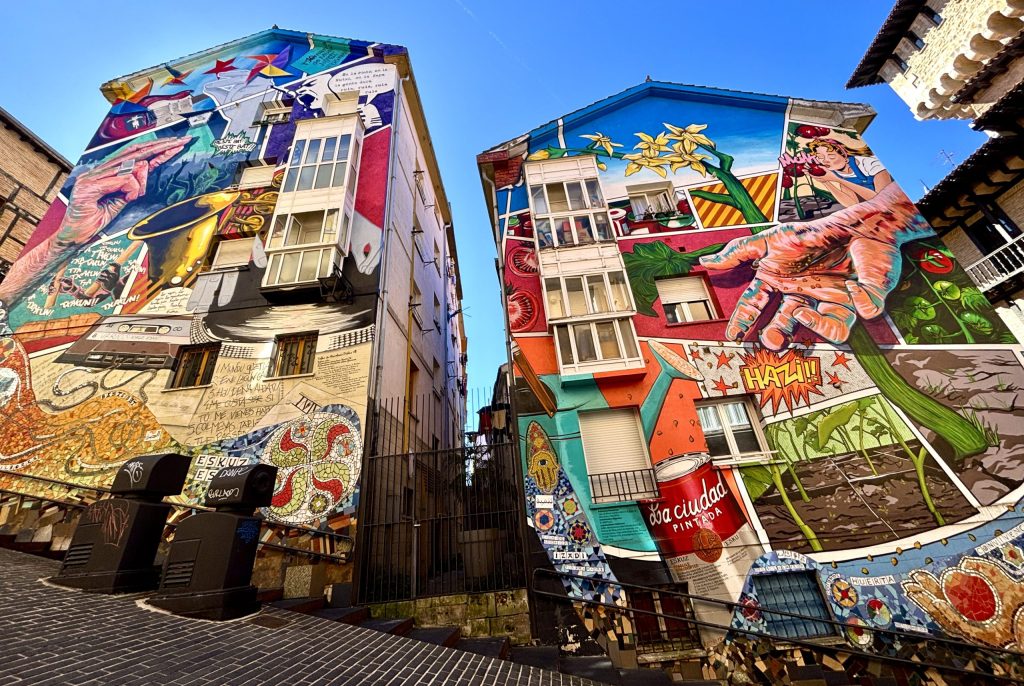
The old town is well preserved and nicely compact. The street going to it was full of large street art murals that Ton loves. We spent a good deal of time climbing the steep street and taking in the art. After we got into the old town we noticed the next street over had escalators going up the hill to deliver you to the top without the climb. This is a modern feature we have seen a few other times in Spain.

The old town was quite empty as Vitoria is not on the tourist lists. We think it has a lot to offer and wouldn’t be surprised to see it become the next hot place in Basque country.

Ton kept commenting about how Vitoria had a nice small town feel. I agreed with her but I also pointed out that I don’t think it is a small town, as small towns don’t have tram lines. Later Ton confirmed that the population was 260,000 people.

A palace and a section of the city walls..

After spending an hour in the quiet old town, Ton handed me the name of a restaurant to find. It had the simple name that translates into English as Restaurant #7. Walking to Restaurant #7 we descended into the modern city and found a street full of cafes, restaurants, and Pinxto bars and many of the people of Vitoria out enjoying the blue skies and perfect temperatures.

Vitoria was full of outdoor restaurants and Pinxto bars, and people enjoying them in the wonderful fall weather.

We arrived at Restaurant #7 and all the outside tables were full, but there was room inside and we managed to get a table. This restaurant had a four course menu of the day with a bottle of wine for €23. The menu was in Spanish only, but I got our drinks going in Spanish. The rest of the interaction with the waiter was in Spanish and though I suspect his English is better than my Spanish he made an effort to keep me in Spanish by coaching me a bit. It added to a good experience. We each picked a different dish for each course and they were all wonderful. Restaurant #7 has set the bar high for service, atmosphere and food for the rest of the trip.

We were very full and a bottle of wine is a big commitment for the two of us these days so after finishing the meal we walked it off for about 20 minutes before we decided to head back to François. This time I purchased our tickets, but after boarding realized I had not validated the ticket as required; so once again we had to sweat the fare police until we got off. The next time we ride the tram in Vitoria I will get it right.

Vitoria was a wonderful surprise for us. The kind of place we look forward to when we travel because it has history we don’t know, but feels like a place that is lived in, and not just looked at.

September 19, 2026 San Sebastian SP

We woke up to a beautiful sunny day just as predicted. We headed into town early to continue our Pinxto crawl. San Sebastian has really made its name as a foody city for good reason. We have not had a bad dish in our three trips here.

We came across this gentleman wrapping small rubber bands around the claws of these tiny crabs. He explained to us that they made excellent bait for fishing.

Pinxto bars are very informal, they are bars and at the bar there are small plates of various dishes. You just point at what you want they hand it to you and you head to a table to eat. It makes for a very informal operation, but the key thing is that the small dishes are delicious.

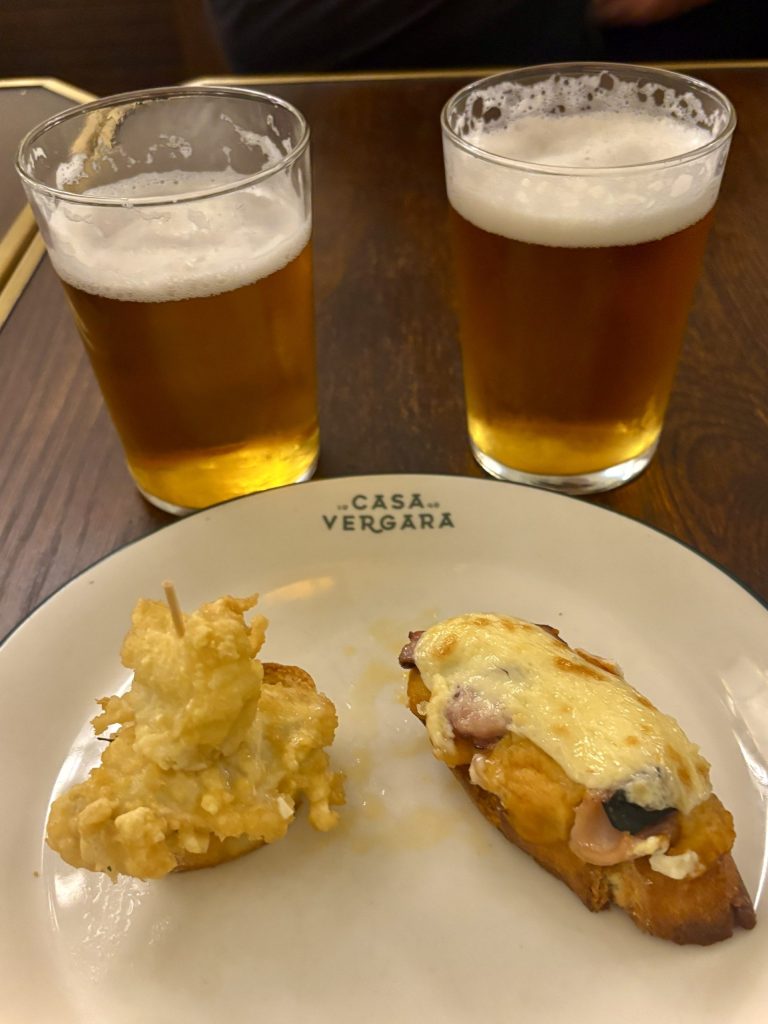
Typical pinxto’s. The one on the left is cod, the one on the right is octopus.

So today we spent the day stopping at a Pinxto bar for no more than two Pinxto’s with a beverage to wash it down, then going out and walking the town to take in a site. We repeated that process three times visiting a different bar each time, to complete a very satisfying day.

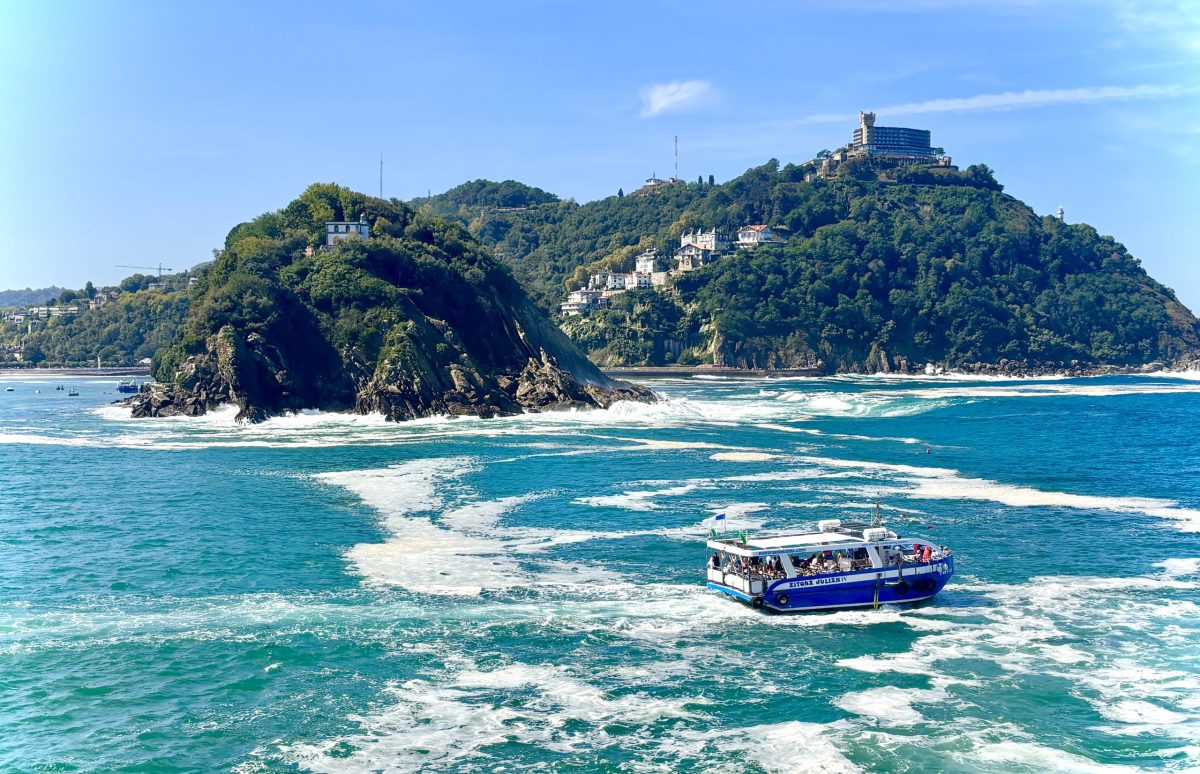
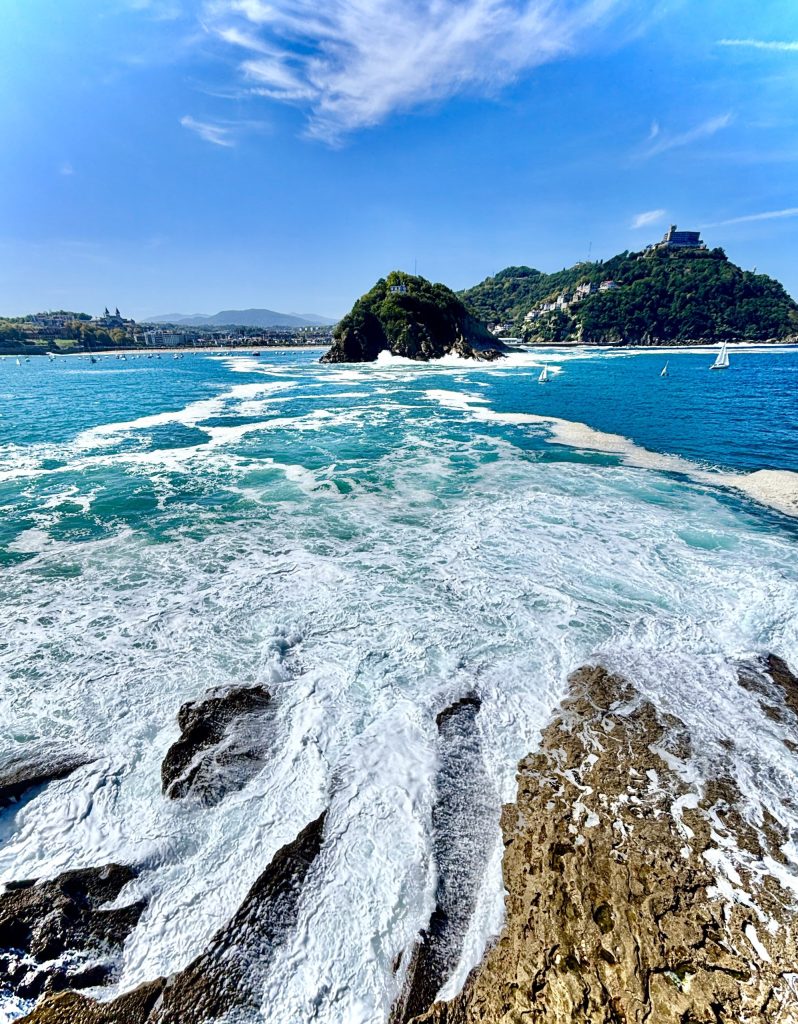
The entrance to the harbor in San Sebastian is spectacular.

When we first came to San Sebastian 8 years ago it was a tourist centered town, but since then it has become a hot town for tourism. The bars were all a little busier than we remembered from our first visit. But despite being busier the places still have retained the character and quality that impressed us the first time we came.

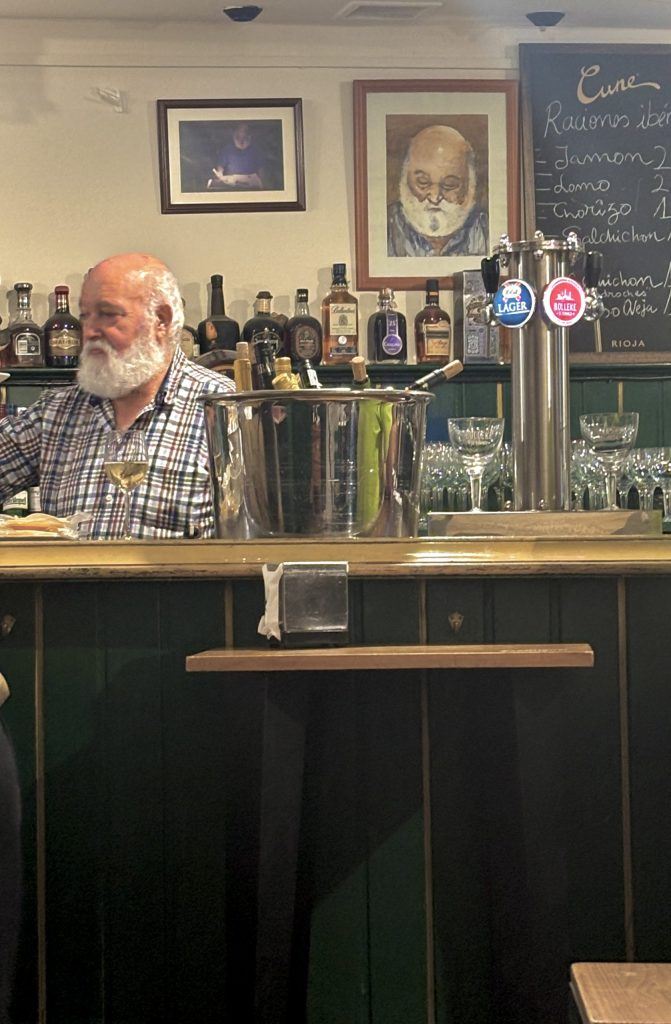
The proprietor of our favorite Pinxto Bar. No one behind the bar was under the age of 60. The clientele here was 80% Basque, 10% other Spanish, and 10% foreign. We really enjoyed this place.

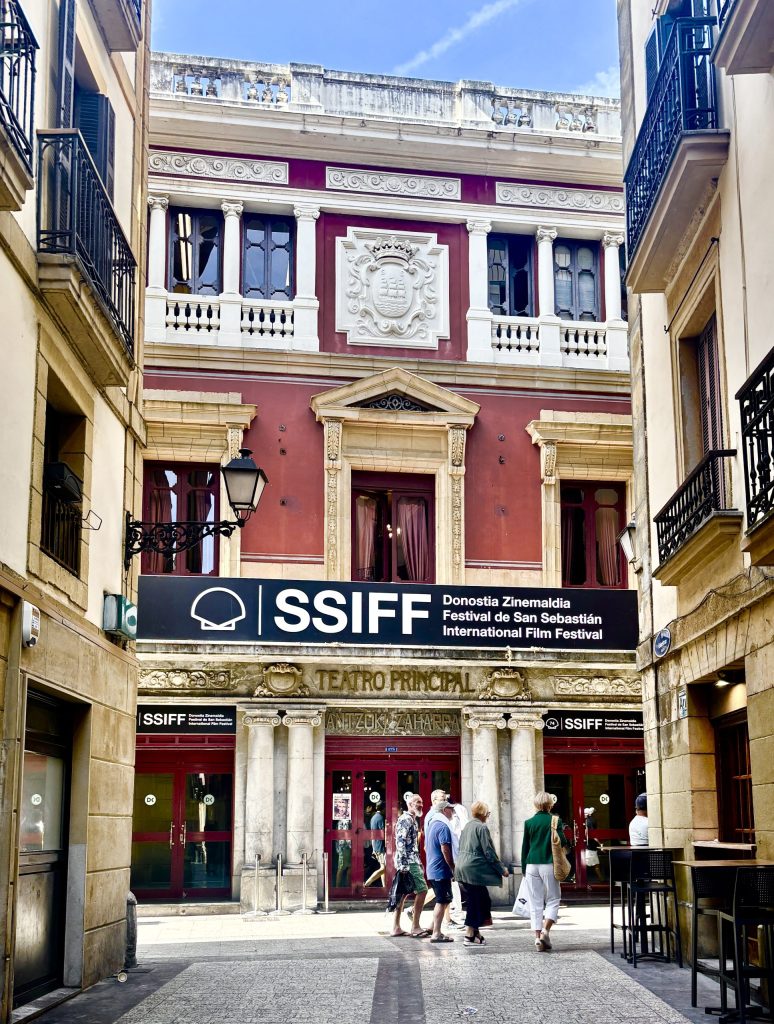
There was a lot more activity around town associated with the film festival today than yesterday. I was on the lookout for stars, but didn’t see any.

One of the theaters hosting the film festival.

Today was the most walking of the trip, despite the old town being pretty compact. We just enjoyed strolling the streets taking in the sites and people watching. It allowed us to walk off our Pinxtos as well as the samples of Beer, Vermouth, Cider, Sangria, and Gin we tried today.

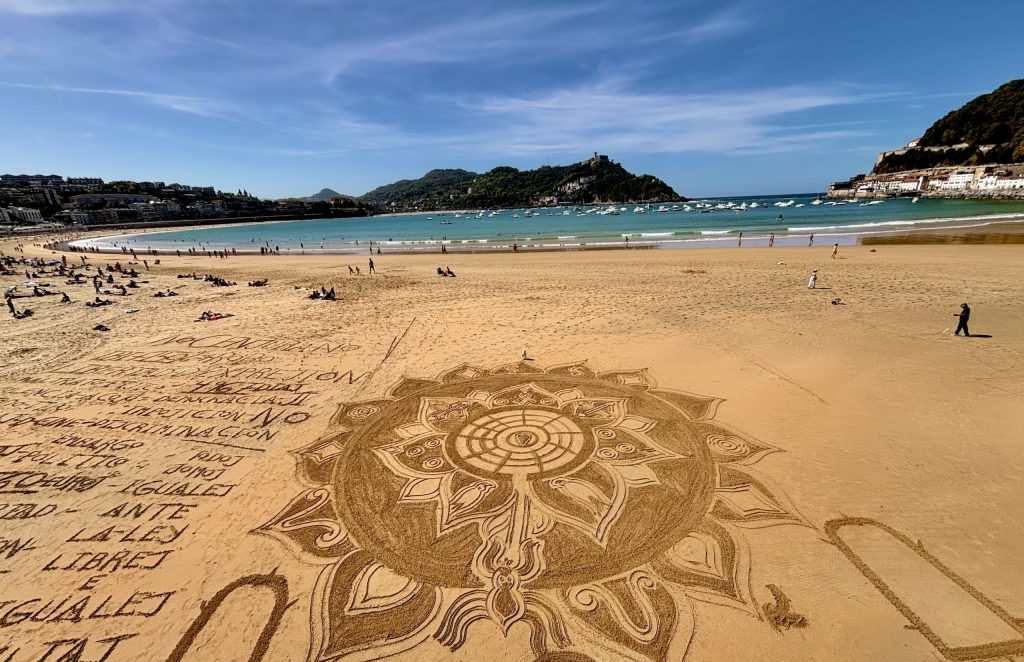
Beach art.

As we were walking we discussed how some towns just have a feeling that makes you want to relax and enjoy life. San Sebastian is definitely one of those. We could spend several more days just strolling the streets, sampling the good food and people watching. But alas we are going to move on tomorrow.

The harbor area is also lined with restaurants.

September 18, 2026 San Sebastian SP

The weather was supposed to be better than yesterday, but it wasn’t. The rain started around midnight and was still going when we woke up. It kind of put a damper on our plans for going into San Sebastian today. But, Ton did some research and found the San Telmo Museum had a well reviewed Goya exhibition so we had somewhere to go in the rain.

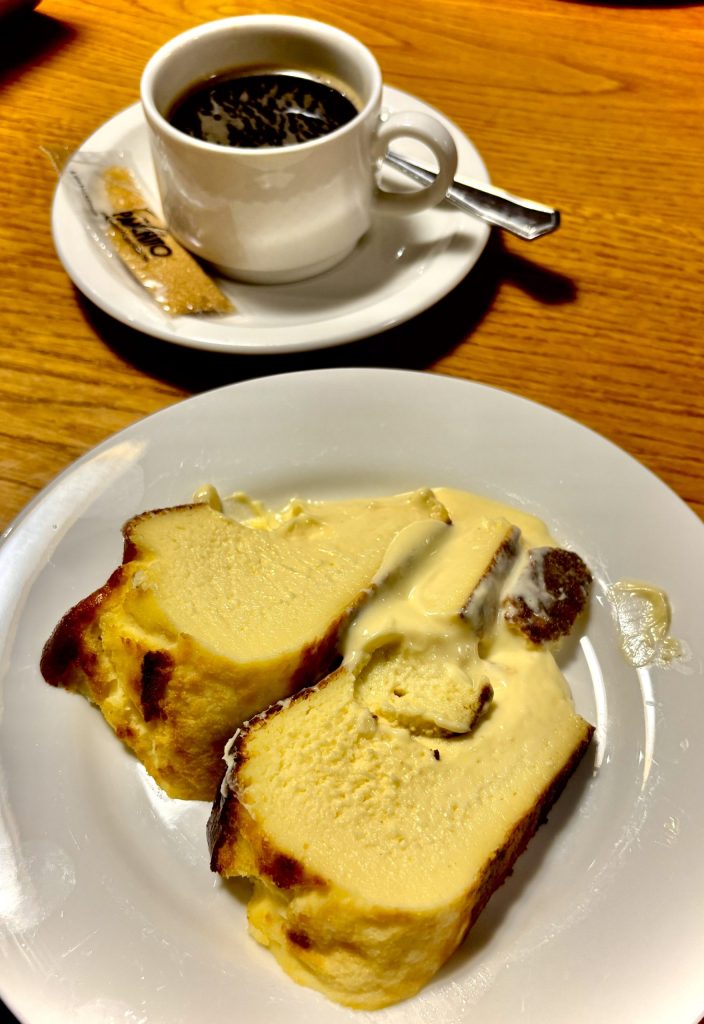
Basque cheese cake as served in the place that invented it, La Vina Bar.

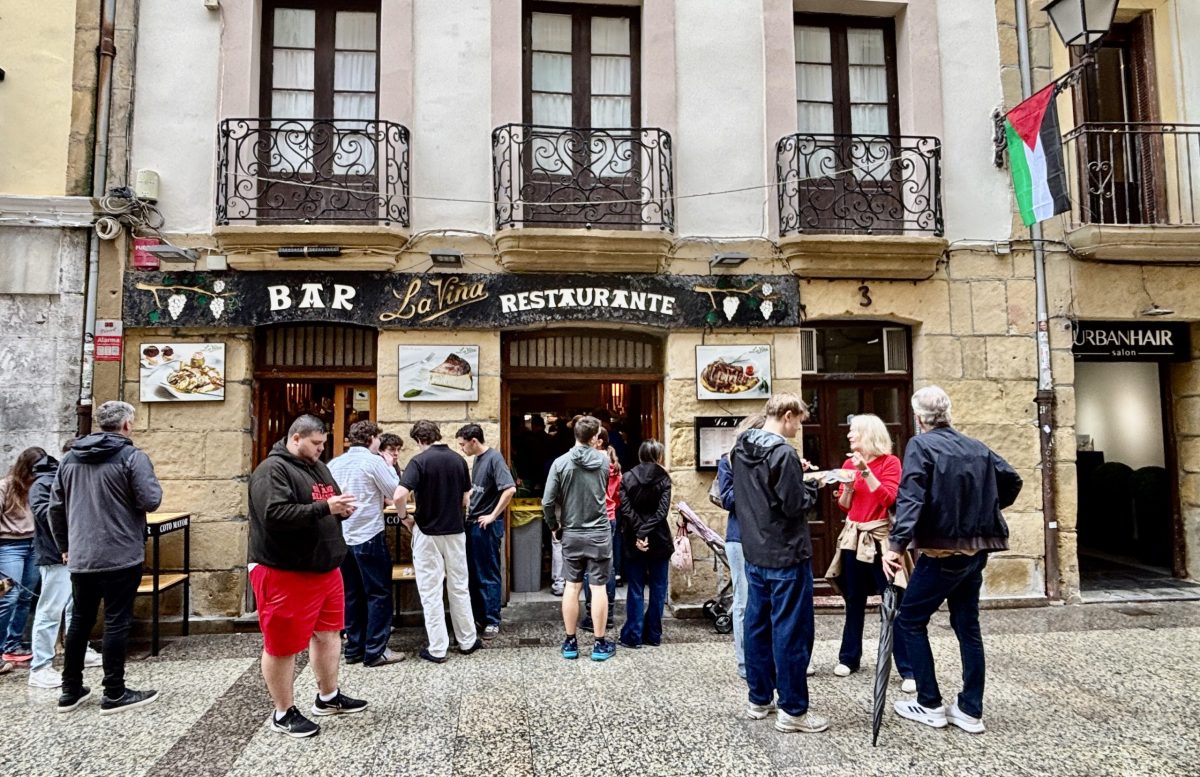
But our first stop was to get some Basque cheese cake that Ton had been looking forward to since we arrived. The cheese cake was invented at La Vina bar and the word was to get there early before the line forms. Luckily for us early means before 1pm in Spain so we were able to get in and share a table with a Japanese couple. The cake lived up to Ton’s high expectations and I also give it a thumbs up. This is not something you should often eat as the recipe calls for 2.2 pounds of cream cheese, 2 cups of sugar, 7 eggs, 2 cups of heavy cream, and 1 tablespoon of flour. It has a flan like texture that makes it distinctive and delicious.

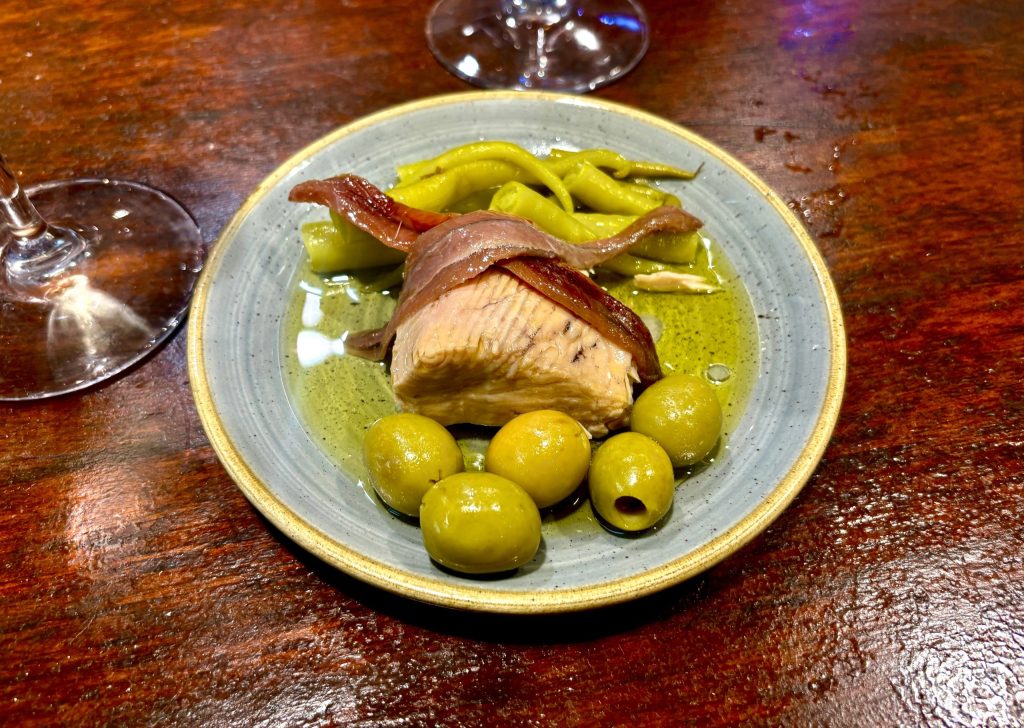
One of our Pintxos.

Having taken care of our dessert we decided it was time for some main courses. The thing to do in San Sebastian is a Pintxos crawl, which is like a pub crawl but with food instead of alcohol (sometimes food and alcohol). We moved down the street to a bar that Ton had read about and this time we were seated with a French couple. One of the nice things in Spain is if a table with 4 tables only has two people the restaurants have no problem seating another couple at the table. We had three Pintxos which are small plates like Dim Sum in China. They were all delicious.

It was raining on and off which kept the crowds down.

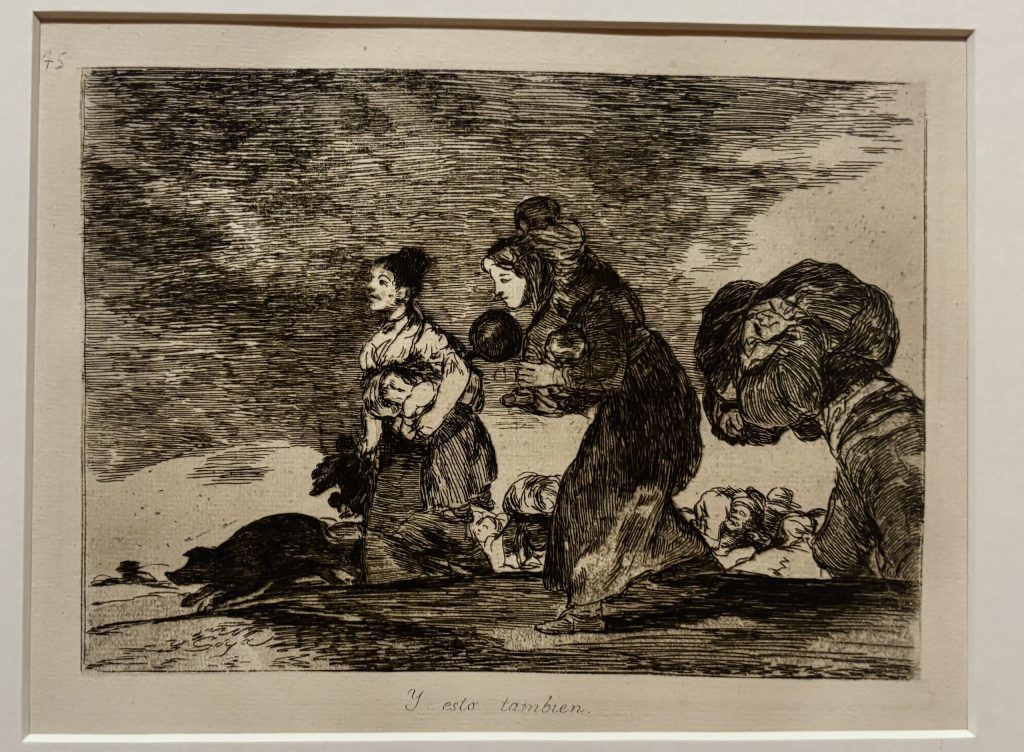
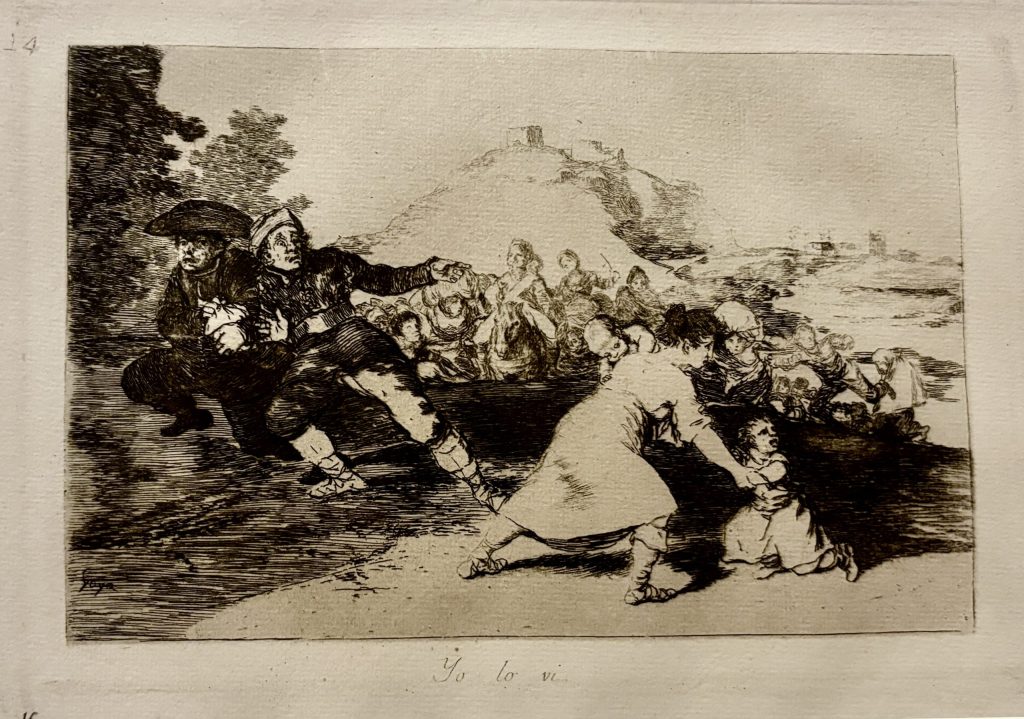
The San Telmo museum is an art museum and a Basque cultural museum. The main exhibition was a series of 80 Goya ink drawings known as the black Goya’s. These drawings reflect the conditions during the Napoleonic war and the return to the absolute monarchy after the war. The subject matter is very dark showing the horrors of war and repression in a very explicit way.

One of the drawings showing women fleeing a battle.

He did these drawings in secret as he knew they would not be approved by the post war royalist government. They were discovered after his death.

Another depiction of refugees fleeing the on coming army of Napoleon.

We spent over an hour looking at all 80 drawings. Some are very graphic depicting executions, mutilations, and rape. For this era when war was glorified they are a striking anti-war statement by one of the greatest Spanish artists.

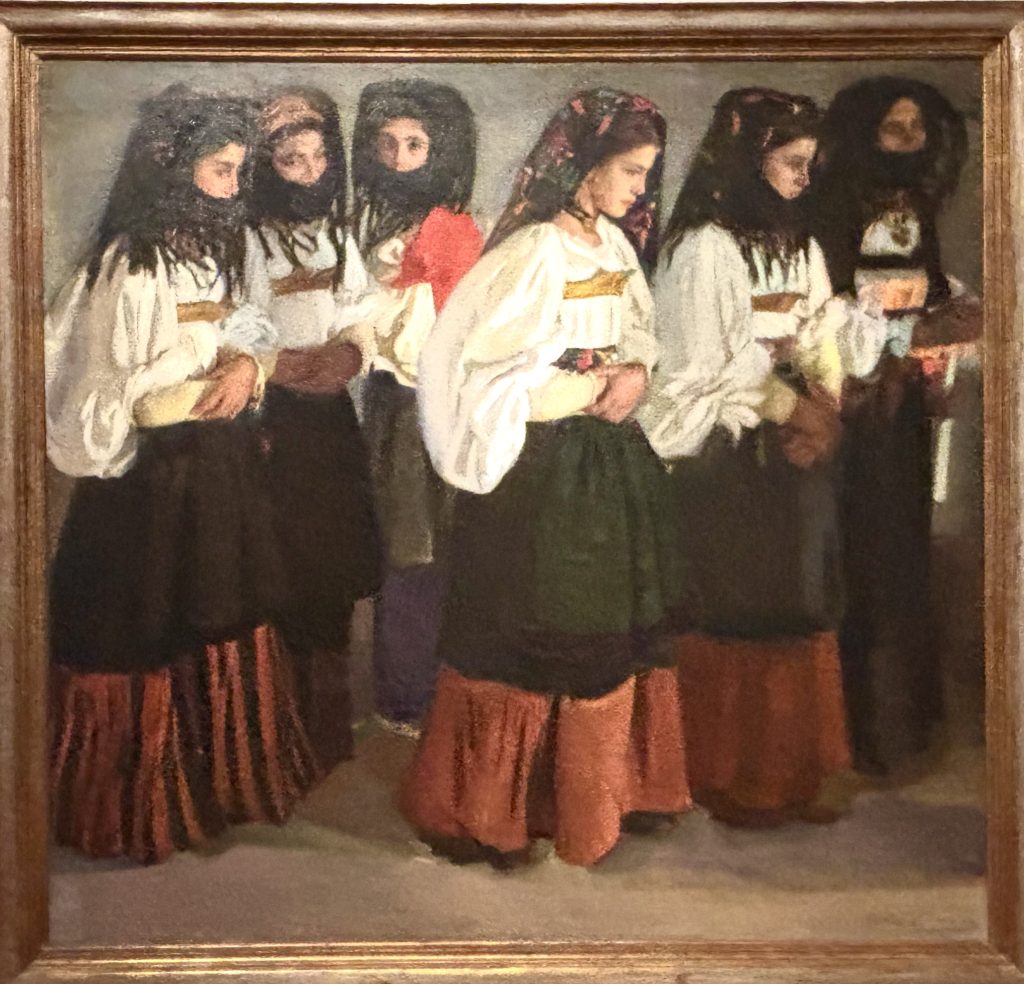
This painting of Basque women is from the 19th century.

There was another gallery of pen and ink drawings from famous artists including Picasso, Rodin, Dali, and Goya. There was no theme to the drawings just examples of different artists sketches. We really enjoyed this.

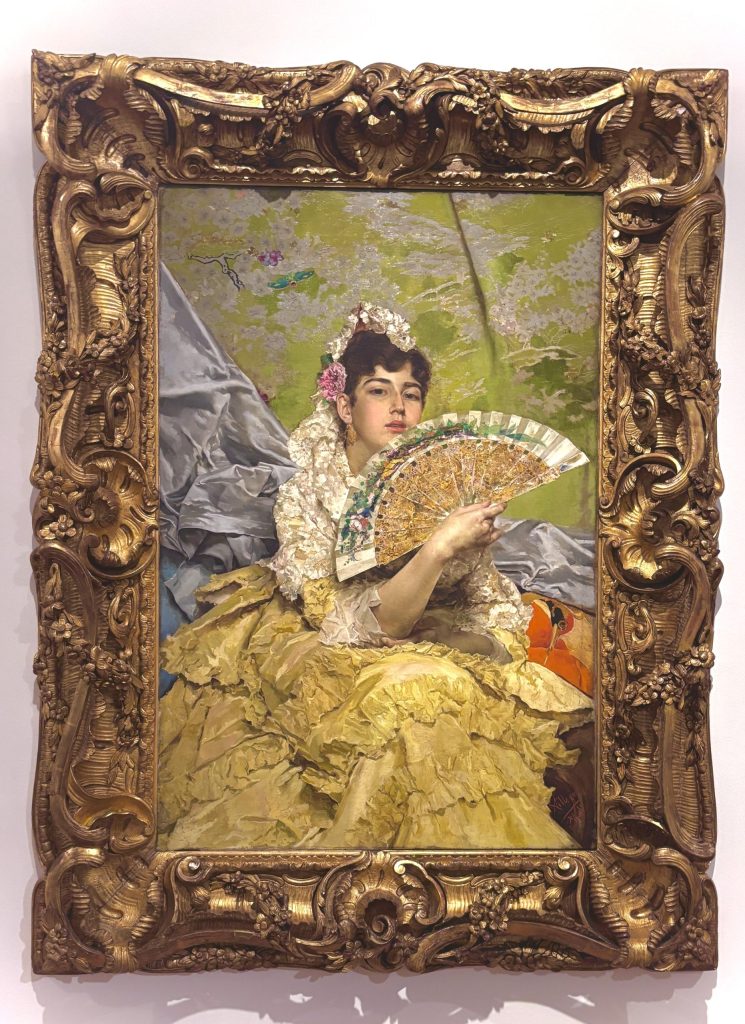
A painting of a Castilian woman.

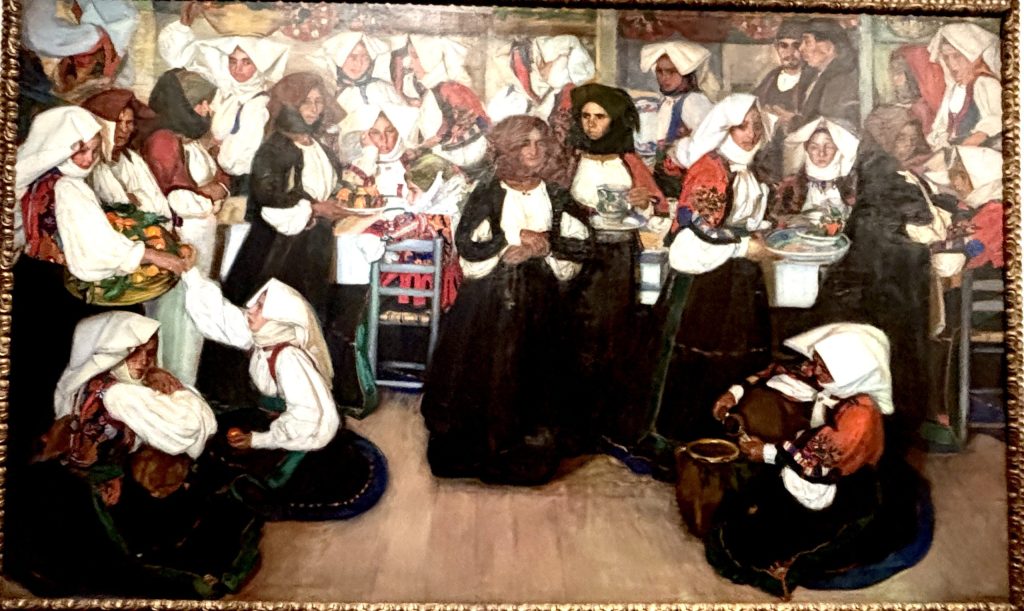
There were two good galleries of Spanish artists we had not heard of that we found interesting. After the art there was an exhibition highlighting the history of the Basques and their role in Spain. There were several audiovisual exhibitions that we sat through that educated us on the role the Basques have played in key parts of history.

A painting showing the dresses and head gear of Basque women from the 18th century.

Unfortunately, part of the museum was closed in preparation for the 100th annual San Sebastian Film Festival which kicks off today, so we missed out on a couple of good exhibitions. The San Telmo is an excellent museum and it turns out we were lucky the rain drove us in there as we would have missed out on a good day.

September 17, 2026 San Sebastian SP

Our day was a simple one, we shifted about 350 kilometers south to Spain. It was an easy drive. We have a favorite camp ground we usually stay at near San Sebastian that we usually just show up for. But based on how busy campgrounds have been, the one we stayed at last night was probably 80% full by nightfall, I decided to try to book our favorite campground in advance. It was a good thing I checked as it was full. We looked for a plan B and found a campground on top of a pretty good sized mountain near San Sebastian and I booked a place for two nights. When we arrived today they were turning people away without reservations.

We are finding that shoulder season is becoming busier and busier. When we first started traveling here it never occurred to us to book anything. We would just show up and were always able to get a place. More and more near popular places we are booking in advance.

We spent the afternoon relaxing and will head into town tomorrow.

September 16, 2026 Saintes FR

We took a bound towards Spain today traveling about 350 kilometers to Saintes just north of Bordeaux. It was an easy drive, we took our time departing Rennes so we got here about 3pm just as six other campers arrived at the same time. The clerk at the check in looked at her full office and made the smart decision of taking an ID from each of us, throwing the gate to the campground open and telling us all to go park and come back to register and get our ID back when we were set up. Its nice to see someone with initiative and common sense.

Saintes is located on Charente River.

Ton informed me on the drive that Saintes was known for 4 things, a Cathedral (of course), a Roman arch, a Roman amphitheater, and an 11th century abbey. Of the 4 the Abbaye aux Dames sounded the most interesting as it is a well preserved Abbaye for nuns from the 11th century. So after settled in we followed the Charente River to town.
The wooden roof in the Cathedral in Saintes.

As we were heading down the river towards the center of town we spotted the Cathedral so we popped over there for a check. The most interesting feature to us was the undecorated wooden ceiling. We think it is the first Cathedral we have seen without a stone or stuccoed roof.

The Roman Arch.

After the Cathedral we spotted the very well preserved Roman Arch across the river so we headed over there for a quick look. The arch of Germanicus was built around 19 AD at the foot of the Roman bridge that crossed the river. We are getting a little jaded as something as well preserved as this arch from over 2100 years ago was met with a “that’s a nice arch”, a couple of quick photos and then we moved on. It is a well preserved arch that was almost torn down in the 1800’s because it was in the way when they were rebuilding the bridge. Instead it was relocated to a riverside park a couple of hundred yards away (so in a way I guess it was torn down, it was just rebuilt).

The French love carousels and this is the most high tech-modern carousel we have seen. It is set a little incongruously in the courtyard of an 11th century Abbey.

The next stop was the abbey. The abbey for women was founded by the Benedictine order in the 11th century and was an important part of the region until the French Revolution. During the Revolution the Abbey was turned into a prison and after the revolution around 1820 it was turned into an Army Barracks until 1944.
Part of the chapel and living quarters of the Abbey.

After the war the city acquired the buildings and have recently been running a hotel in part of the old living quarters for the nuns. The buildings are well preserved having been in continuos use since 1050.

The entrance to the Chapel of the Abbey.

We had hit 3 of the 4 big things in Saintes which left the Roman amphitheater. When I checked the map it would have meant a 2 kilometer round trip in the wrong direction so we decided that we have seen a lot of Roman Amphitheaters in our travels so decided to give it a pass.

Another shot of the Germanicus Arch to fill in for the missed Roman Amphitheater.

We had a nice evening stroll along the Charente to return to a bustling campground. Shoulder season is not as quiet as it used to be in Europe.

September 15, 2026 Rennes FR

Today was a maintenance day. The biggest chore was to get our laundry done. After we were promised yesterday that the washer at the campground would be fixed today- I was pleasantly surprised to find that it was. We had to wait in line to get our shot at the one washer, but after a couple of hours we now have all fresh clothes for the next week to ten days.

The only other thing on the agenda was to find a couple of Breton foods that Ton really likes. We failed on the unpronounceable pastry called Kouginamann, but succeeded in finding some of the buckwheat crepes the area is famous for. After that we relaxed before the rest of the day before we make the 700 kilometer jump to Spain over the next two days.

September 14, 2026 Rennes FR

Brittany is one of our favorite regions in Europe. This is the third time we have visited it. On our first trip to France we just touched the edges of it, but our visit to St. Malo was great and we fell in love with the food in the region. On a later trip to France we spent more than a week exploring Brittany in smaller chunks and were enchanted with it. We tell everyone who asks where to go in France not to miss Brittany. Despite this we had never visited Rennes the capitol of Brittany.

The Cathedral and the carousel two things we will always associate with France.

I was particularly looking forward to Rennes as I expected great things from the capitol of a region that I really loved. Our rough plan was to get some laundry done and then head into town if we had time after laundry. When we checked in I confirmed that they had a washer and dryer and the young lady said yes so I booked two days here. But when I stuck my head into the laundry room there was a note on the washer saying that it was broken. I went back in the office and the manager confirmed it was broken and that it was supposed to be fixed tomorrow. Ton thinks this is probably a Mexican mañana situation, I am hoping for the best. But strike 1 for Rennes.

Most of Rennes was destroyed by fire in the 1720’s so almost all of the houses and businesses date from the mid-1720’s.

After a short rest we decided to head for town for a visit. It was a quick bus ride to the center. Rennes has one of the youngest populations in France as it is the host to over 70,000 university students. Our experience with university cities has been good as we like the vibrancy the students bring. Rennes was alive, but it didn’t strike us as vibrant. Ton was a little turned off by the graffiti that peppered a lot of the buildings, it made the town feel a little dirty to her.

Some cool half timbered buildings.

Rennes felt like a lot of mid-sized French cities. That is not a bad thing, because French cities have a unique vibe with the cafe scene, and the shopping. But what struck me was how little of the Breton Celtic influence was present. What we had really enjoyed about Brittany before was the unique mix of French and Celtic culture. We didn’t feel it here. So strike 2 for Rennes.

Another block of 1/2 timbered buildings.

After a couple of hours we decided to head back to the campground. The bus route was pretty straight forward and I expected us to be back to the campground in about 30 minutes with a 500 meter walk at the end. A few stops before the one for the campground I saw a sign saying there was a “Deviation” on our route. Deviation is the French word for Detour and it is a word I see and immediately go into a cold sweat. I tried to parse the details of the deviation but the details far exceeded my limited French. But I took solace in the fact that we were picked up at the campground so I figured they had to go by there as part of the “deviation”. In the end we got to the end of the route and everyone got off. So instead of a 500 meter walk at the end of the ride we had a 2000 meter walk and it is the hottest day of this trip. So strike 3 for Rennes.

Typical French street scene. We missed the Celtic piece you get in other parts of Brittany.

Luckily the campground is very nice and we are in a beautiful park. I am really hoping the washer gets fixed tomorrow to help Rennes redeem itself.

September 13, 2026 Oustreham FR

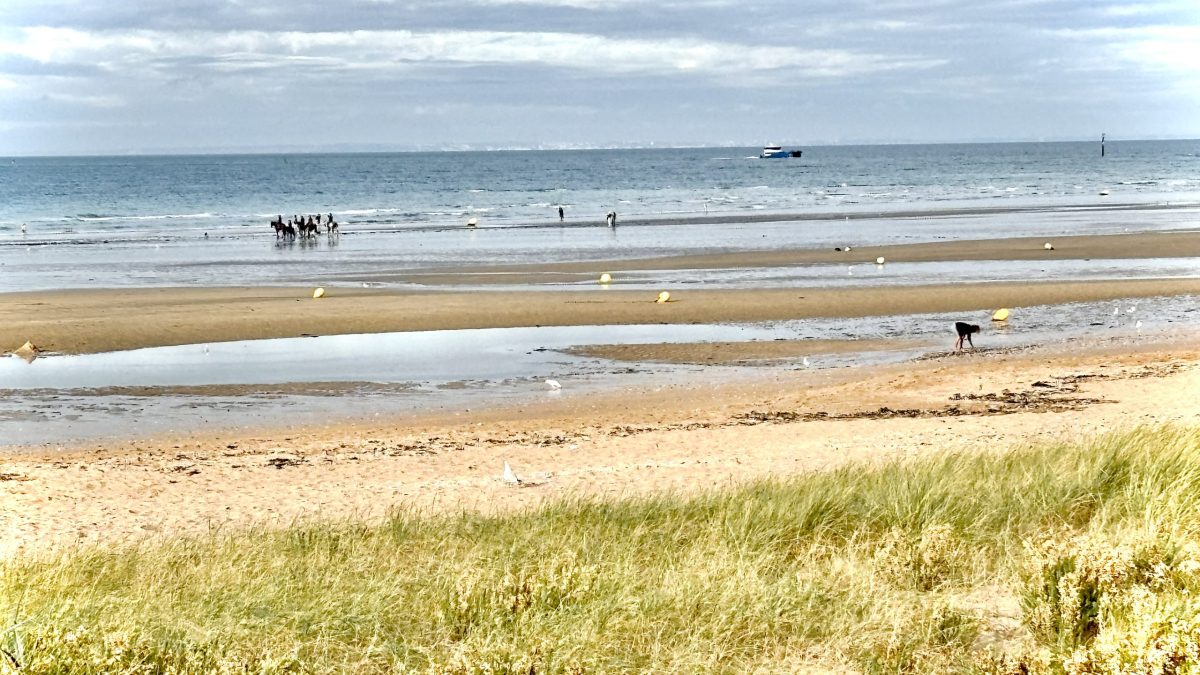
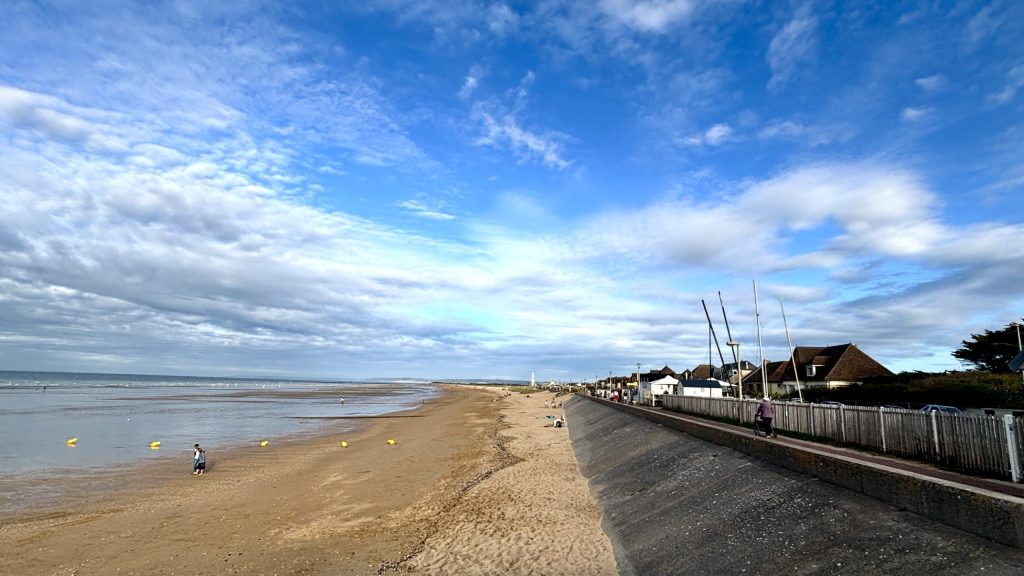
Sundays are always a good day for a long drive in Europe. The trucks are not allowed to drive so we are one of the slowest vehicles on the freeway. This allows me to set the cruise control and enjoy long stretches with a coffee in my hand while everyone passes us by. Today we covered about 200 miles and ended up at a campground smack in the middle of Sword Beach in Normandy.

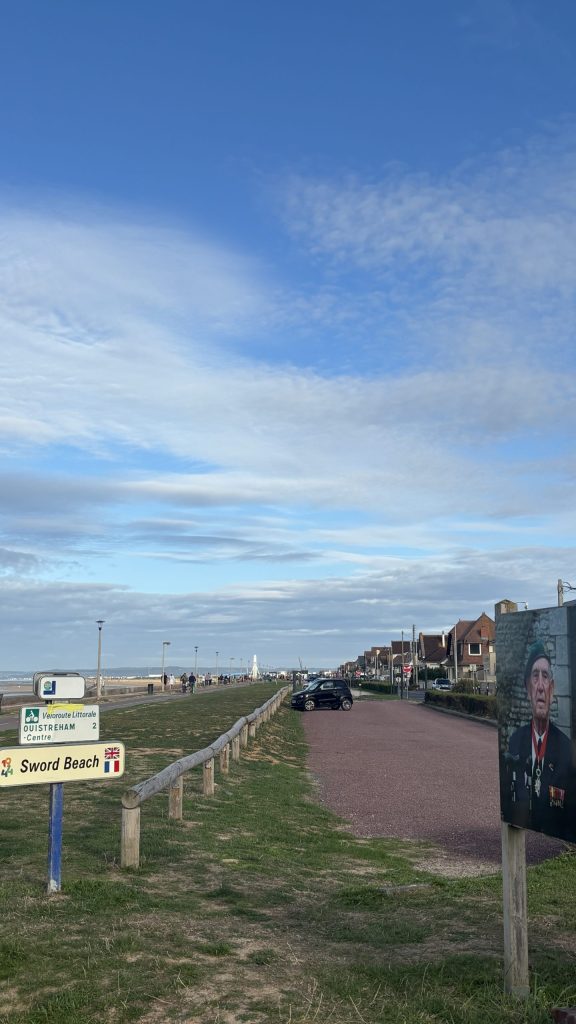
Sword Beach was one of the 5 main landing beaches for the Normandy Invasion in WWII. The troops that landed here were nearly entirely British, though a small contingent of French Marine Commandos landed very close to the location of our campground. Unlike Omaha Beach (the beach depicted in Saving Private Ryan), the landing here was accomplished with very low casualties. The problems for the British came later as they attempted to reach Caen about 10 kilometers inland.

All along the promenade there were pictures depicting veterans of D-Day taken 60 and 70 years after the landings.

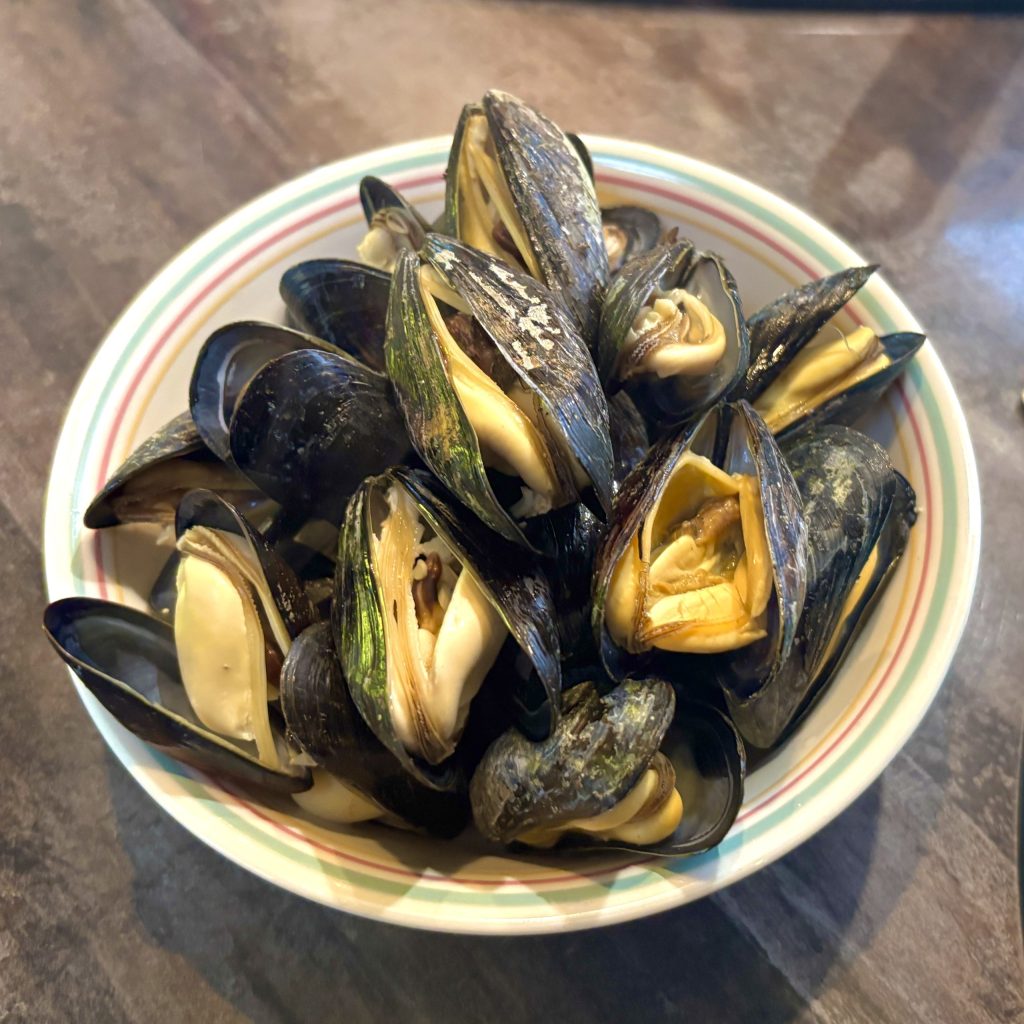
We took it pretty easy when we arrived. The campground we are staying in has been largely converted to small cottages. People rent the camping space by the year and bring in small 300 to 400 sq ft. cottages that they place on the spot. When we checked in we were shown to a spot between 3 of these cottages. One of our neighbors was cleaning a large bag of mussels they had procured somewhere. Ton struck up a conversation in hand signals and Franglish, and before we know it we were gifted a small bowl of them along with instructions on how to prepare them. Ton steamed them for our evening snack and they were delicious. It is these small interactions that make these trips special.

Our delicious gift from our French neighbors. The Norman mussels are famous in France, and these more than lived up to the reputation. It helps that they were in the ocean 4 hours before we ate them.

September 12, 2026 Amiens FR

We have been trying to visit Lille in northern France for several trips. Each time it has been on the agenda we have skipped it for one reason or another. So we were determined to stop this time. We found a campground on the edge of the city and as we drove Ton did a good deal of research on things to do in Lille, we were looking forward to the day. We arrived at the campground around 11:20 which should have been well before the French 2 to 3 hour lunch break. The campground looked nice and we could see plenty of places to park, but the office was closed. There was a sign to ring the doorbell which I did, but no response. There was another sign to call a phone number if no one answered the door bell. I did that and no one answered the call. I finally texted the phone number and did a quick search of the campground trying to find someone to no avail. So once again Lille remains unvisited.

The Gothic Cathedral in Amiens.

We have decided to follow the Atlantic coast of France as we head down towards Spain, and the next stop we had planned after Lille was in Amiens. It wasn’t too much farther to Amiens so we decided to push on. As we drove Ton did some quick research on what to do so we could hit the ground running. The area between Lille and Amiens was the site of some of the most bloody battles of WWI. The British and Commonwealth troops were responsible for this area. The roads we were driving were lined with massive graveyards of British, Canadian, Australian, Indian, and Chinese soldiers. After a while Ton said the road reminded her of the trail of tears in the US and she began calling it the British trail of tears.

The entrance to the Amiens Cathedral.

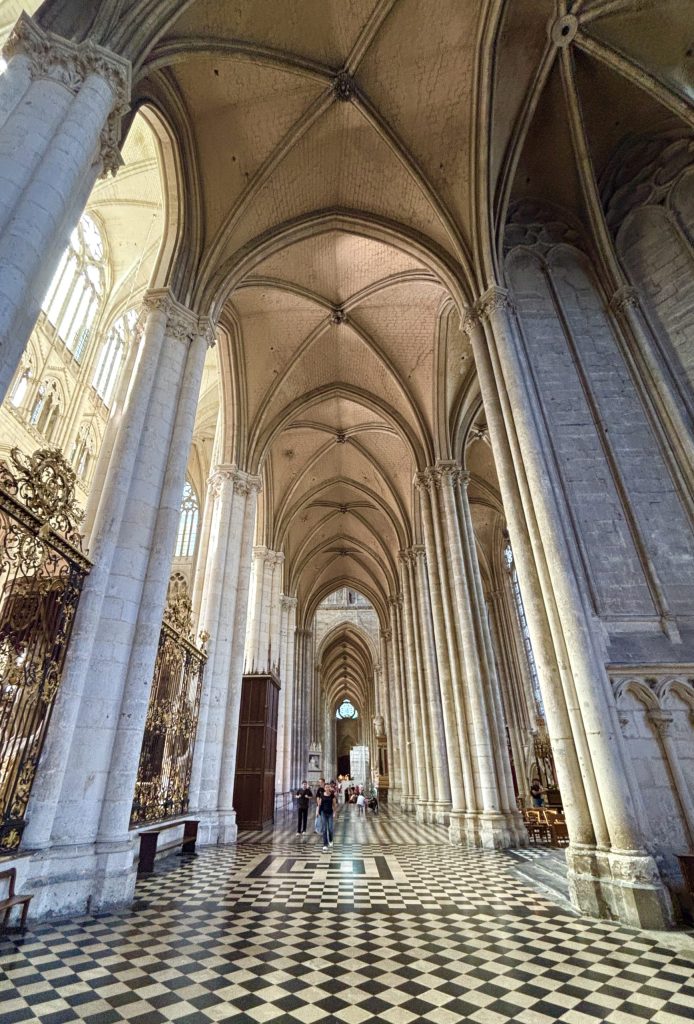
As we were driving Ton announced that the Amiens Cathedral was the biggest Gothic Cathedral in France by volume. I said that is a weird way to measure the size of a building, but she said nevertheless it is twice as big as Notre Dame in Paris by volume, with over 400,000 cubic feet of interior space. When we arrived I had to concede that it did indeed have a lot of volume to it.

An interior view of the Cathedral showing off its impressive volume of space.

The interior is massive and the ceilings are impressively high. It is quite a building and it luckily was largely untouched when Amiens was fought over in both world wars.

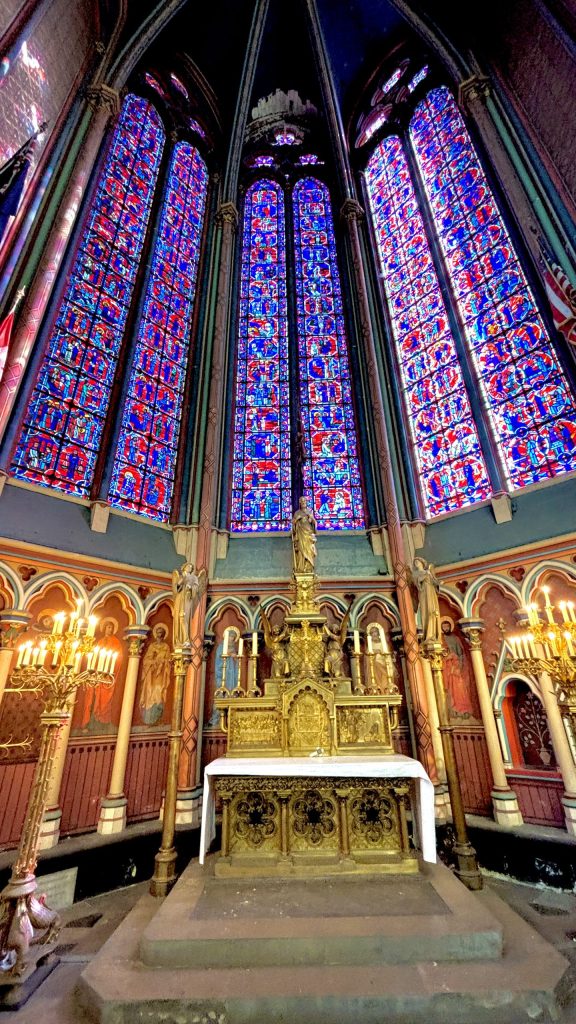
The beautiful stained glass windows were removed and safely stored during both World Wars so they have survived intact.

Amiens is split by the Somme River and it has a nice neighborhood of old homes that survived the wars mixed with newer homes built after WWII to replace homes that were destroyed.

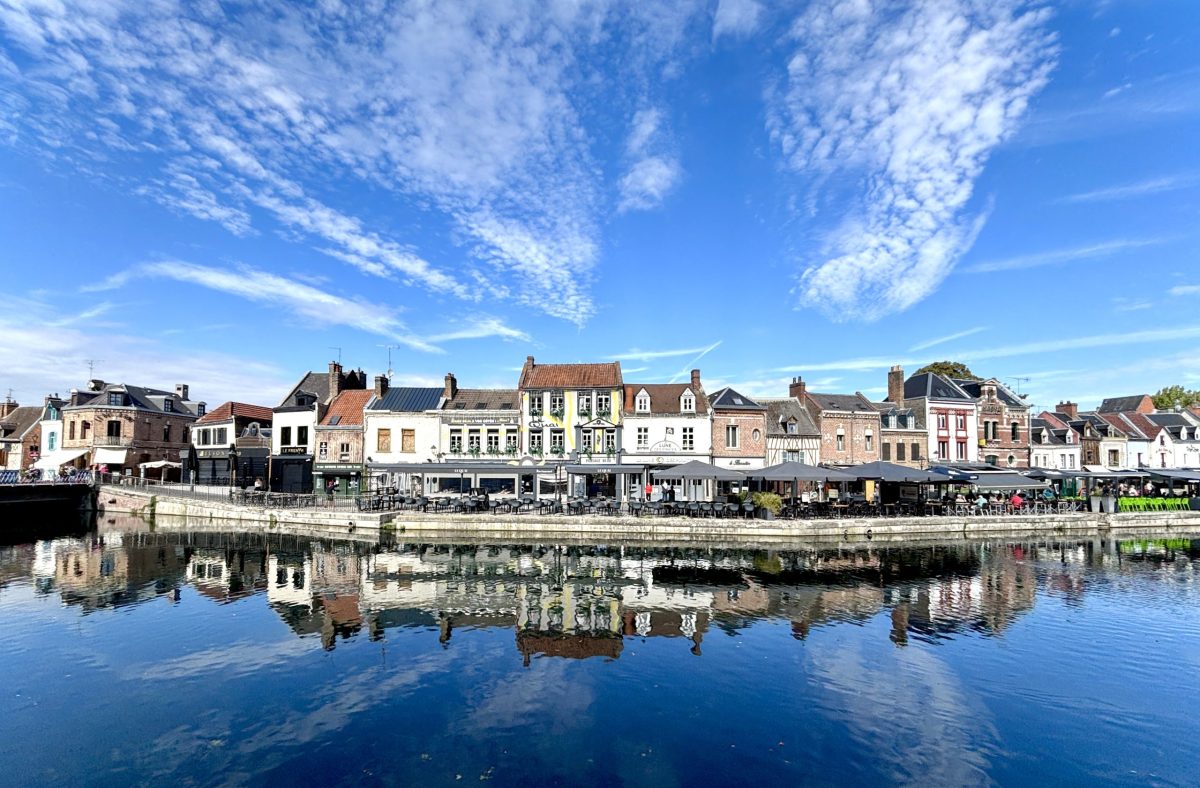
One of the canals running through the city showing the mixture of 18th and 19th century homes intermingled with 20th century homes.

We spent a few hours wandering through the city and enjoying the perfect weather. But after a while we both realized that in our rush to get to town we had missed lunch and were famished. In France there is a period between 2pm and 6:30 pm when almost all restaurants are closed. Particularly in cities that don’t cater to tourists. Amiens is definitely one of those cities as we did not hear one non-French voice in our entire time walking the streets. So we decided to head back to François for the night and get some food.

September 11, 2026 Dunkirk FR

Last night we decided to go over to Dunkirk today. It is only about 40 minutes from our campground in Belgium. Our first thought was to get a campground there, but none of the campgrounds appealed to us or required a minimum 7 day stay, so in the end we decided to drive over to Dunkirk and return to our campground in Belgium at the end of the day.

This statue now guards the border between France and Belgium at the small town we crossed.

It was a nice drive through the Flanders countryside, and the border crossing caught us by surprise in a small village. Once again there was no indication until we saw the sign indicating we were entering France and all the signs changed from Flemish to French.

The blue sign indicates we are entering France.

Dunkirk is the sight of the famous evacuation of 400,000 French and British soldiers during WWII. The Germans were in the process of fully defeating the combined French and British armies in 1940. Early in the campaign about 500,000 British and French troops were surrounded at Dunkirk. This included most of the British Army. The priority for the evacuation was the British forces as it was pretty clear that the French were going to surrender to the Germans and the British were going to fight on.

The museum commemorating the evacuation at Dunkirk.

The British government committed a large part of their navy to the withdrawal despite the great danger to the ships from the German air force. In addition hundreds of pleasure craft manned by their civilian owners were asked to assist, as well as significant numbers of French navy vessels. The British initially hoped to rescue 40 to 50,000 of their troops, but in the end they saved over 300,000. The French defended the shrinking pocket while the British were given priority for withdrawal. The French troops fought valiantly to hold off the Germans on the ground. The last three days priority was given to withdrawing French troops and nearly 100,000 were withdrawn to Britain.

A monument to the forces that defended Dunkirk.

The 300,000 British troops saved went on to make up the core of the British forces that participated in the liberation of France in 1944. Unfortunately, the majority of the 100,000 French troops were returned to France just as the government surrendered to the Germans.

The majority of the troops were evacuated through the port of Dunkirk, but nearly 100,000 were evacuated across these beaches using small craft manned by civilian volunteers from England who sailed their personal boats over.

After the museum we headed into the city to take a look at the port and the town hall. The town hall was largely destroyed during WWII, but has been rebuilt to its original look and is now a UNESCO site.

Dunkirk with the correct French spelling.

English is funny with place names. English uses the Flemish spelling for the French city of Dunkerque, but for the Flemish city of Ieper 30 miles from Dunkirk we use the French spelling Ypres.

A nice windmill just as you enter France.

After we had finished with Dunkirk we realized there was still time for more exploring so we decided to return to the Witches Kettle to enjoy the ambiance of the place. When we arrived it was much busier and Lena had her hands full, she hit us with a flurry of Flemish which we didn’t understand, but one of the customers translated for us. We were to pick our beer out of the cooler and bring it to her to pour.

François had good company in the parking lot as a rich peoples sports car club was visiting, the parking lot was full of Porsches, Jaguars, and even a really cool Citroen two seater I had never seen. That is the road the bicyclists are on, not a bike path.

Since the place was full we asked our impromptu translator if we could join him and had a great conversation about beer, economics and politics. We asked what he does for a living and it turns out he runs a campground which competes with the one we are staying at. We promised him we would stay at his place next time we are passing through.

Ton loves this old Laurel and Hardy display holding a tray promoting Coke Zero.

We may not be regulars at the Witches Kettle, but we won’t forget the couple of hours we spent there.

September 10, 2026 Roeselare BE

Today we visited another brewery on our bucket list for Belgium. Rodenbach Brewery is famous for its barrel aged Red beers. After our best nights sleep so far we headed out on the 45 minute drive to the brewery.

Part of the restaurant at Rodenbach Brewery.

We arrived at the brewery and signed up for the tour. They have a unique way of deciding what language the tour will be in, the tour guide speaks French, English, and Flemish/Dutch, which ever of those languages is spoken by the most people on the tour, is the language for the tour. Today there were 9 Dutch/Flemish speakers and 2 English speakers so the tour was in Flemish. They asked us if it was ok and we said sure. She did fill us in on key points in English as we walked on the tour.

Enjoying my lunch in front of retired beer barrels.

The pub and gift shop were beautiful but empty. We were the only guests for lunch, but the food was outstanding, and our first taste of the beer convinced us we had made the right decision to drive over.

The malt room is from 1863, but the wind vane on top was installed in 1933. It helps control the heat when they are roasting malts.

The brewery has been in business for 200 years and produces a rare type of beer. Most beers are bottled very quickly after they are brewed usually within a few days. But in the case of Rodenbach a lot of the beer goes into giant wooden barrels called foeders and is aged for 18 to 24 months. There are 296 of these barrels and the larger ones hold 17000 gallons of beer.

They have nearly 300 of these giant barrels called foeders.

After the beer finishes aging it is mixed with newly made beer to create different classes of beer. The most expensive is pure aged beer, and the least expensive is 1/4 aged beer and 3/4 new beer. The type of fermentation they use gives the beer an interesting fruity and sour taste. I am not usually not a fan of these sour beers, but these were exceptional and I enjoyed them.

This lady is quite tall so you can get a perspective on the size of the barrels.

The barrels are made of French oak and require constant maintenance. The brewery employs a full time cooper (barrel maker)which must be tough to recruit for when there is turnover.

The old brewery which now hosts the restaurant. The new brewery is very modern looking.

After the tour was over we enjoyed our sample beer and purchased some more excellent beer for the trip. I am really going to be looking forward to our evening beers as we head south.

Ton tried this fruit beer which is mixed with lemons and limes to make something like a Aperol Spritz.

September 9, 2026 Westvleteren BE

Today was one of the days we really enjoy when we are traveling. We saw nothing spectacular, but we will really remember this day when we look back on this trip. Our plan was pretty small for the day, we wanted to visit two breweries that are quite close to our campground in the Belgian Hop farming country. But it was the place that was not on the itinerary that made the day memorable.

They are starting to harvest the hops, but this field was still untouched.

Just as we were getting ready to depart Ton mentioned one other place she wanted to visit. Some time last night while I was sleeping Ton came upon an article about a small inn that she found intriguing called De Helleketel and was very enthusiastic about it. I punched it in to Maps and found that it was on the way to the first brewery, so we made it our first stop of the day.

De Helleketel Inn on a quiet one lane road in the middle of the Belgian countryside.

We were driving on single lane roads with pull outs, and I was wondering what we were going to find when we came upon this really cute inn. De Helleketel means the Witches Kettle in English so we were intrigued. We arrived a little before noon and there was one couple sitting at a table with the owner Lena having a boisterous conversation in Flemish. We entered a little tentatively but Lena made it clear we were welcome and told us to sit anywhere.

The view from the window of De Helleketel in business since 1895.

Over the next few minutes several more couples about our age entered and joined in the conversation with Lena. Next to our table was an old Seeburg jukebox that used to fill all the corner taverns in the US. Lena saw us looking at it, and came over and encouraged us to pick out some music. For the next 45 minutes Ton became the resident DJ spinning 60’s and 70’s hits for an appreciative Belgian crowd.

The last working jukebox of its type in Belgium. (According to Lena.)

The Belgian couple next to us struck up a conversation, they are from Leuven in northern Belgium and he is a retired policeman. What was interesting was he informed us that he was having a really hard time following the conversation of the local Belgians. He told us that this was a very old form of Flemish close to the way the language was spoken two hundred years ago. He was really enjoying hearing this old fashioned dialect and told us that these kind of places, the local country inn, were getting rarer and rarer, as were people who spoke this dialect. He kept referring to the inn as a treasure which we both agreed with.

The gloriously tacky bar in the Witches Kettle.

Unfortunately, I was driving or we could have settled in for another hour or two at De Helleketel. But we enjoyed it so much we may squeeze in another trip before we head south.

St. Bernardus Brewery.

Our next stop was a former Abby Brewery. The last priest retired a few years ago and the recipes and the brewery was sold to a private party but without a priest working it can no longer call itself an Abby Brewery. The beer is being brewed the same way as when it was an Abby Brewery but the owners are marketing it widely including in the US. The last time we were in the area some local people recommended we visit it as it had spectacular views. We had our lunch here and the beer and food was excellent and the dining area was sparkling and very modern. The views from the third floor of the restaurant were spectacular. We enjoyed ourselves but it lacked the down home charm of Lena’s Witch Kettle.

The corn is standing tall.

All of our driving was through different fields of crops on single lane roads. Luckily the traffic was light today so we could enjoy the peace of the countryside while trying to guess what some of the crops were. Except for obvious ones like corn we were both pretty clueless.

The entrance to Saint Sixtus Abby.

Our last stop was Saint Sixtus Abby which produces one of our favorite beers Westvleteren Beer. The monks make just enough beer to keep the Abby open, but they make very good beer. One of their beers is frequently on the best beers of the world list so the scarcity makes for high demand and people drive from all over to get a case or two of the beer.

Painting of the monks who produce the nectar of the gods on the table.

We had our third beer of the day, (spread over 4 hours), and picked up two six packs for our trip. We then headed back to our campground in the fields and settled in for a quiet night after a memorably quiet day we both really enjoyed.

September 8, 2026 Westvelerten BE

Despite jet lag continuing to have an edge in the battle of sleep we decided to get going south The big motivator was the fact that it was supposed to rain heavily all day in Amsterdam. We selected Westvelerten as our stop because there are several breweries in the surrounding area. We stopped here last year to pick up some samples of one of our favorite beers and Ton did some research and found several more breweries conveniently located within 30 minutes of Westvelerten. It is only three hours south of Amsterdam so it is a perfect place for our first stop traveling south.

Political signage using hay rolls.

The drive was pretty easy, it was just starting to rain when we left the campground in Amsterdam but after a few minutes we were out of the rain and it was mostly dry for the rest of the drive. The traffic was light in the Netherlands though it got heavier in Belgium.

The campground is on a working farm/pub. The goats are cute and trained to look for handouts from the guests.

Right after we arrived at the campground and finished setting up François the skies opened up. We took that as a sign to hunker down and enjoy some movies.

September 7, 2026 Amsterdam NE

We are starting to get ahead of the jet lag, this time we both woke up around 8 and could have functioned, but it turns out we are retired and don’t need to do anything at 8 am, so we went back to sleep until a more civilized hour.

The main library in Amsterdam is the largest in Europe.

Today the weather was perfect blue skies and temperatures in the mid 70’s so we headed into the city for the day. Ton loves bookshops and libraries and Amsterdam has the largest library in Europe so it was our first stop for the day.

Part of the interior of the library.

We wandered through the 7 floors of the modern building that hosts the library. In addition to books it has a conference center, a theater and two cafes. It is an impressive and well used facility. We really enjoyed a small art feature by a Portuguese photographer they were showing.

The sixth station of the cross.

As we were heading to our next destination we came across St. Nicholas Basilica and popped in. While Ton is Buddhist she was educated in Catholic Schools, she enjoys visiting Catholic churches and always seeks out the 6th station of the cross which is known as “Veronica wipes Jesus face”. Ton likes the story of Veronica helping Jesus. St. Nicholas had a very large and detailed depiction of the scene that Ton enjoyed.

The interior of the Stork. Our favorite Brown Bar in Amsterdam.

After our detour to St. Nicholas we headed on to our main destination for the day the Stork. Last time we visited Amsterdam we stumbled into the Stork by accident and had the best time. The server then went out of her way to make us feel welcome and even ran down the street to get us a slice of apple pie when we mentioned we were looking for a slice of it. It was magnificent customer service.

The required picture of a canal every story about Amsterdam must contain.

After that we decided the Stork was our hometown bar in Amsterdam. Today there was a different server worker, but she was just as nice. The Stork is what is known as a Brown Bar. These are local places that used to be frequented by working people before the tourists overran the city. And while the Stork is located in the infamously over touristed red light district it has found a nice balance between catering to locals and tourist. Dutch is definitely the language of the bar, but everyone also welcomes visitors and happily switches to English. We again enjoyed our visit to the Stork and will return again next time we are in town.

Cafe Karpershoek, the oldest continuous operating bar in Amsterdam from 1606.

Our final stop of the day was the oldest continuously operating bar in Amsterdam. Cafe Karpershoek has been a licensed establishment since 1606. It was also located on the waterfront in Amsterdam, but unlike the Stork its clientele was almost exclusively tourists and English was the first language in the place. We recommend you try it as how often can you drink in a place that has been serving beer for 420 years, but then move to the Stork where you can drink in a place nearly as old that is indisputably Dutch.

Amsterdam center.