

When we arrived in Rioja Ton gave me a list of places we should visit so today we moved 7 kilometers to the next stop. Briones is considered one of the most beautiful villages in Spain. It is set on a hilltop on the border of the Basque lands and Rioja with a commanding view of the Ebro River valley where much of the grapes for Rioja are produced.
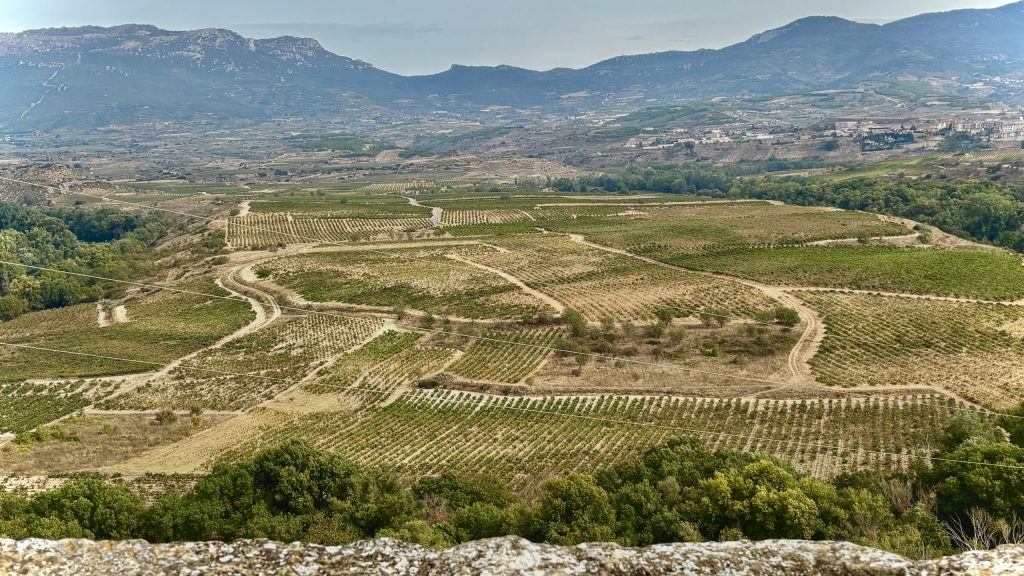
We found a good parking lot at the base of the hill and then began a strenuous climb to the center of the village. Google said it would take 15 minutes, but they don’t factor in elevation gain.
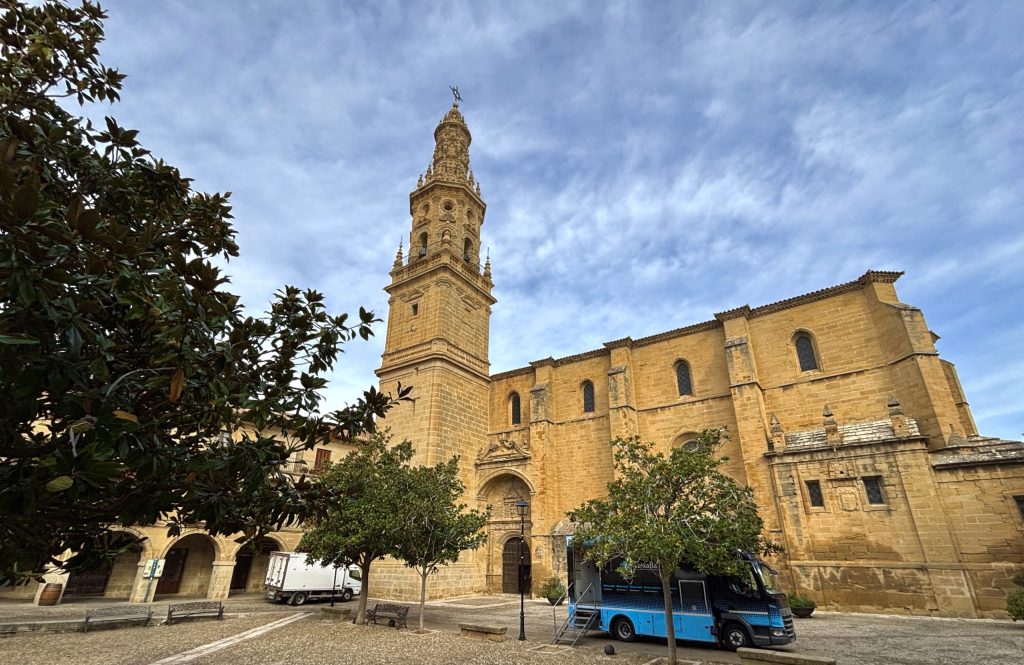
It is a picturesque village that has retained most of its original buildings, but it was eerily quiet. Most of the buildings appeared lived in but unoccupied. There were no kids on the streets, no sound of a school, and everyone we came across was at least 50 years old.

There were a few tourist oriented businesses, a couple of hotels/B&b’s, and a few restaurants. There was also a nice museum showing what a middle class home in Rioja looked like in the 1800’s. But no other sign of commerce or non-tourism businesses.

It looks like the town has lost its bank as there was a truck parked on the main square with the logo of one of the main banks in Spain calling itself a mobile bank. In the right place this town would be teeming with tourists. Ton and I were quite startled with how very quiet it was.

Looking down from the town I saw a very large and modern structure. Ton had mentioned a wine museum near Briones, and this turned out to be Vivanco Winery which is the site of the wine museum. After finishing our walk through Briones we decided to head there.

When we entered the winery and inquired about the museum entrance fee the lady at the counter told us the price and then said for €10 more we could also do an English tour of the winery. Ten minutes later we were on the tour.
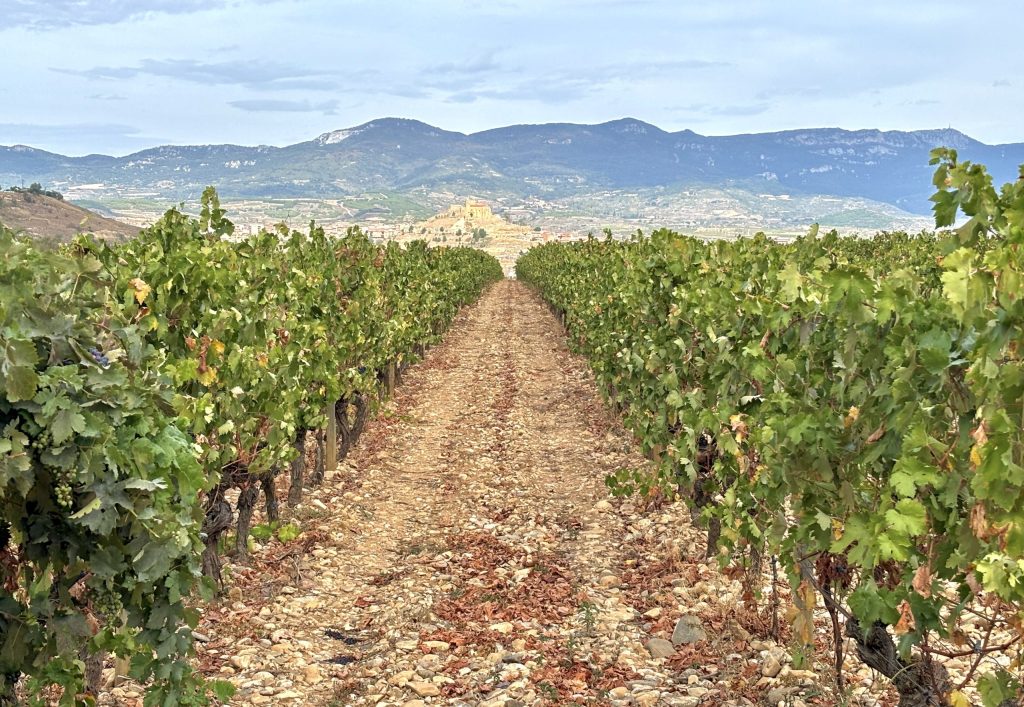
The tour guide was awesome, there were 4 couples on the tour and we had all done a wine tour before. He said great then he would focus on winemaking in Rioja instead of beginner winemaking. It was perfect. He started by saying this was the earliest harvest in the history of Rioja. Most of the time because of the geography of the valley harvest is spread out over 3 months with the grapes around Briones being one of the last to be brought in. I learned a lot about the bureaucracy of winemaking in Rioja which was both interesting and perplexing.
This winery is new for Rioja having been founded around 1990. The facility was very modern and beautify designed. While the buildings are modern the process they use is traditional for their Crianza’s and Reservas which are the standard Rioja wines. But they produce 14 non-traditional wines that they use modern methods on.
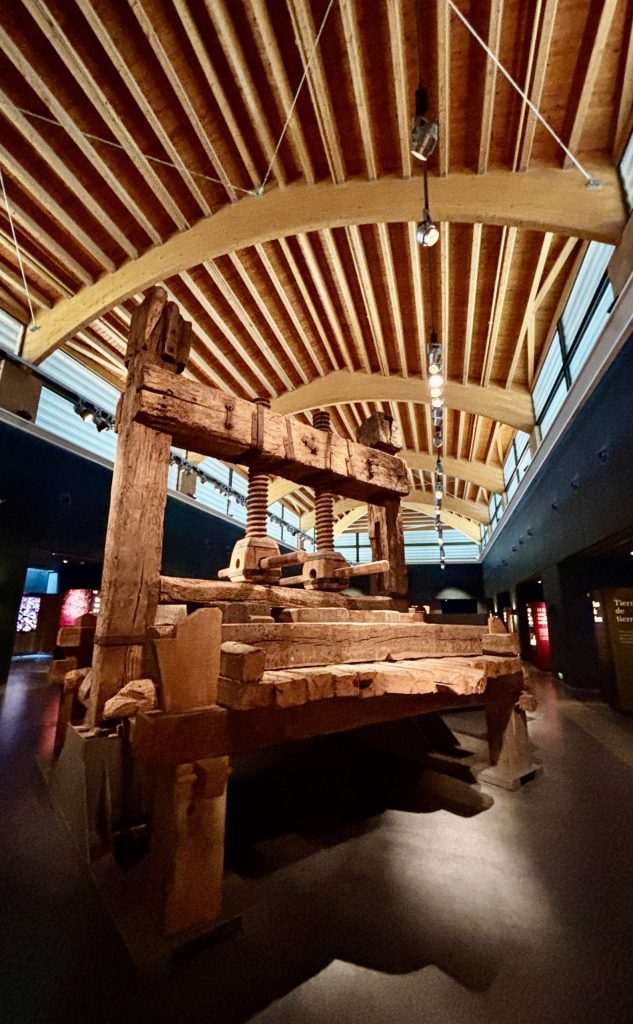
After our tour we headed into the museum for what we thought would be the anti-climax. But the museum was amazing. It focused on different technologies needed in wine making and consumption including pressing, lab machines, storage vessels, and the largest collection of corkscrews in the world.
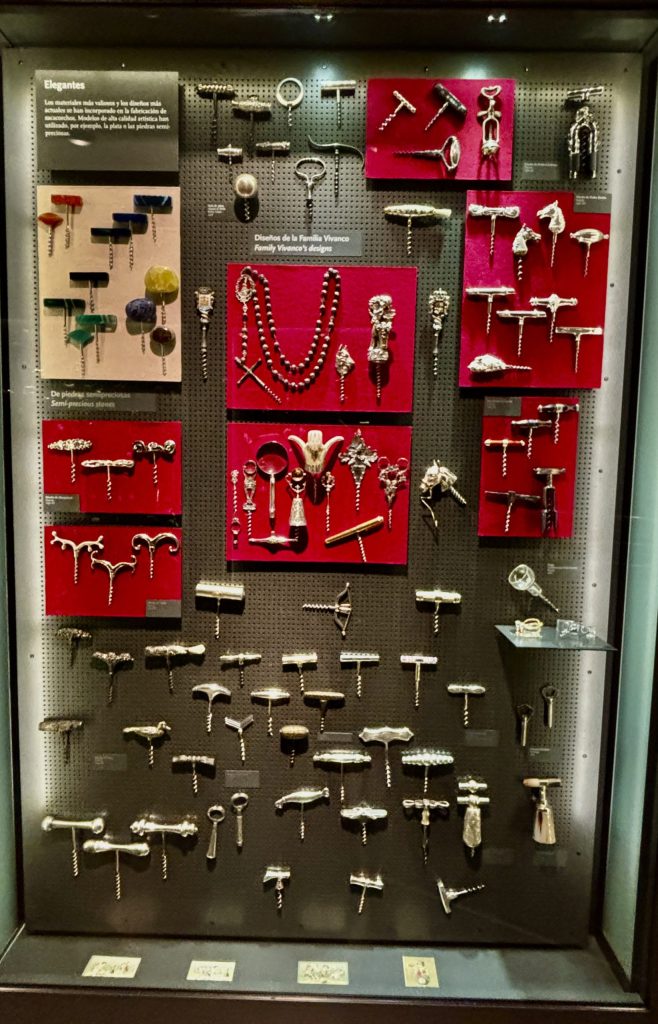
We spent much longer in the museum than we planned and before we knew it was 4 pm and time to move to our next campground on the other side of the Rioja valley.
