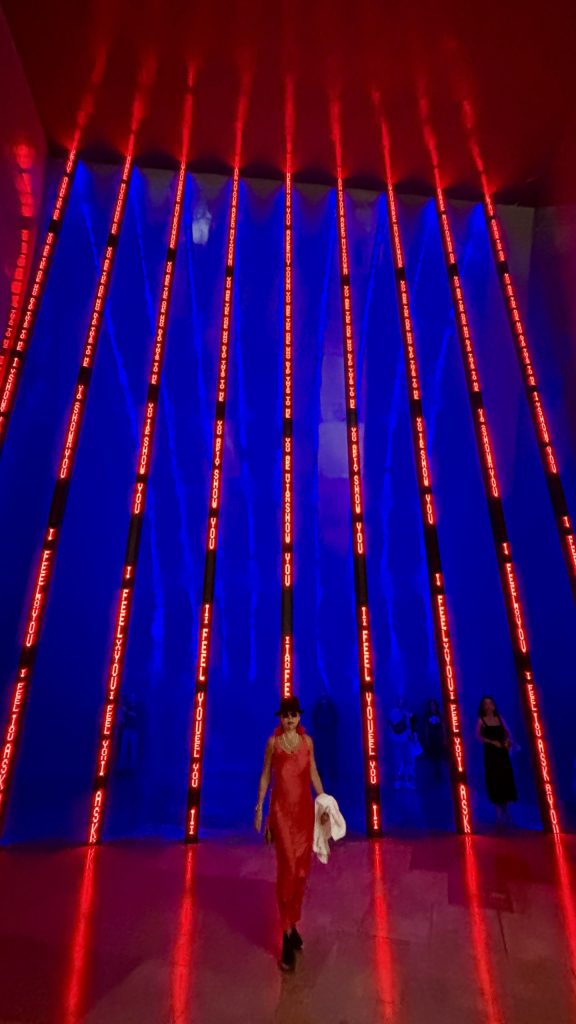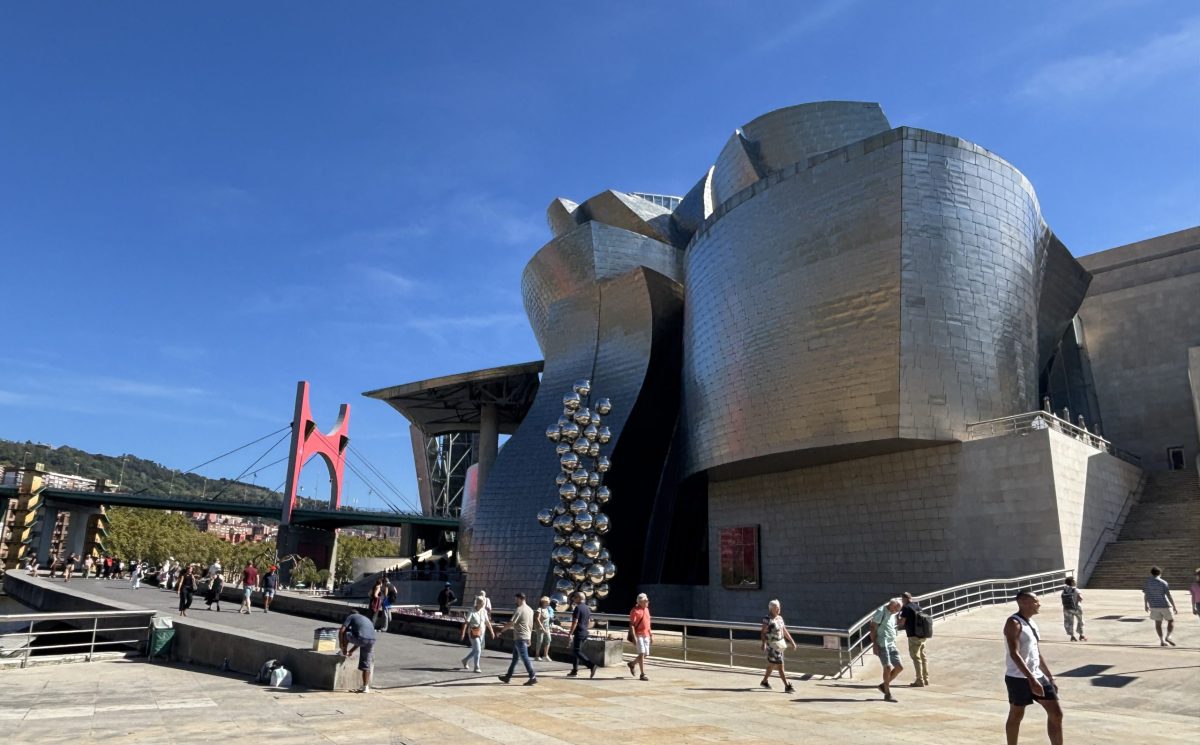
Before 1997 Bilbao was known as the steel city of Spain. In the 1990’s the city was trying to find a way of participating in the booming tourism scene in Spain so they told the Guggenheim foundation they would fund a museum of modern art in Bilbao if the family would help develop it. In 1997 the Guggenheim museum was opened to the public.
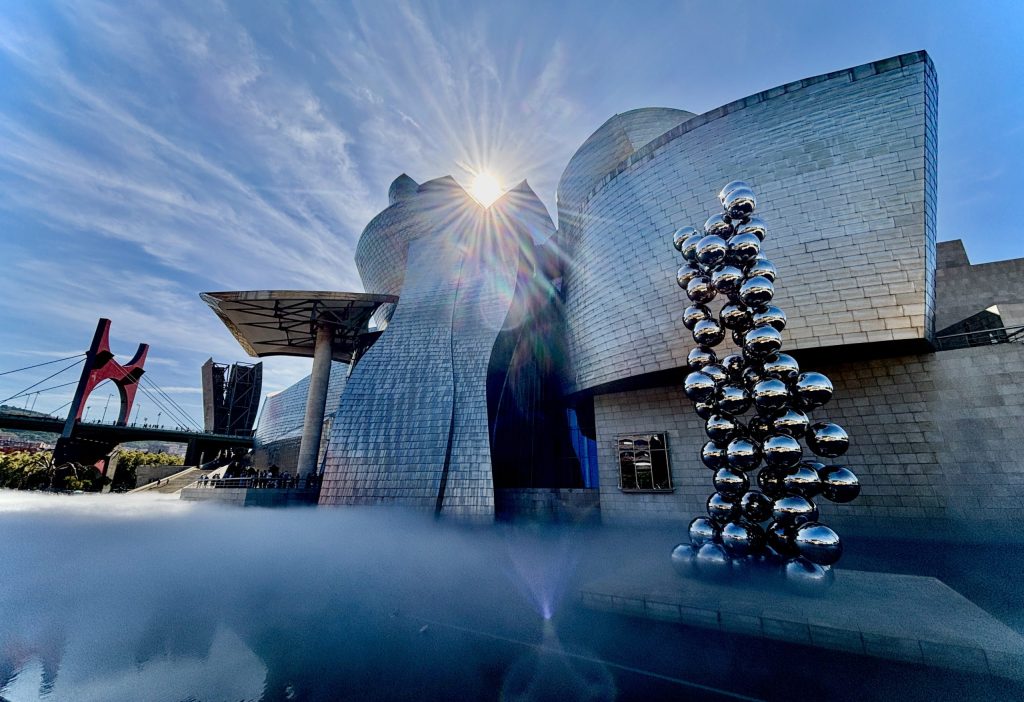
Initially there was some negative reaction to the Americaness of the project. The Guggenheim’s are American, and the architect for the project was also American. But the finished building is strikingly beautiful, and the art inside curated by the Guggenheim foundation is drawing large crowds.
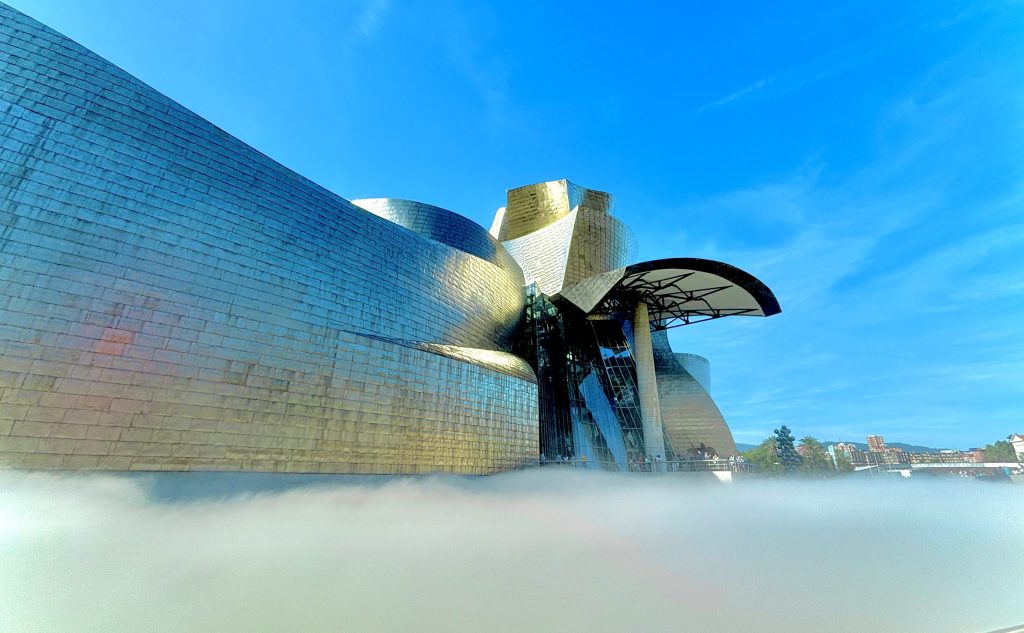
We walked around the building taking in the exterior which is flowing and non-angular. The titanium exterior changes colors based on the natural light and contributes to the natural feel of the building.

The last feature on the exterior is a giant topiary designed by another American of a dog. It is not a serious piece of art but blends in well with the sense of the building.

When you enter the museum you are greeted by an immense atrium that goes up over 150 feet. It is a mix of metal and glass and feels like it is cascading down from the ceiling.
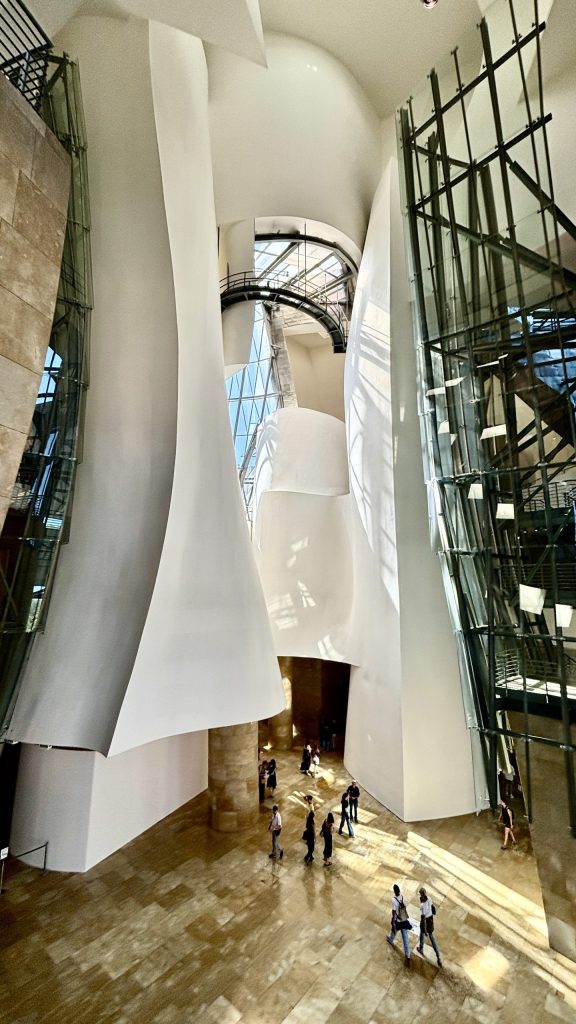
The building is a work of art in itself. Inside are permanent and rotating exhibits reflecting its focus on contemporary art. On the first floor is a giant hall of steel plate structures that is both simple and moving. One structure is a circular path that ends in an empty place that struck me as whimsical. You keep walking expecting to be rewarded at the end, but the reward is in the journey, not the destination. It seemed appropriate to our life as long term tourists.
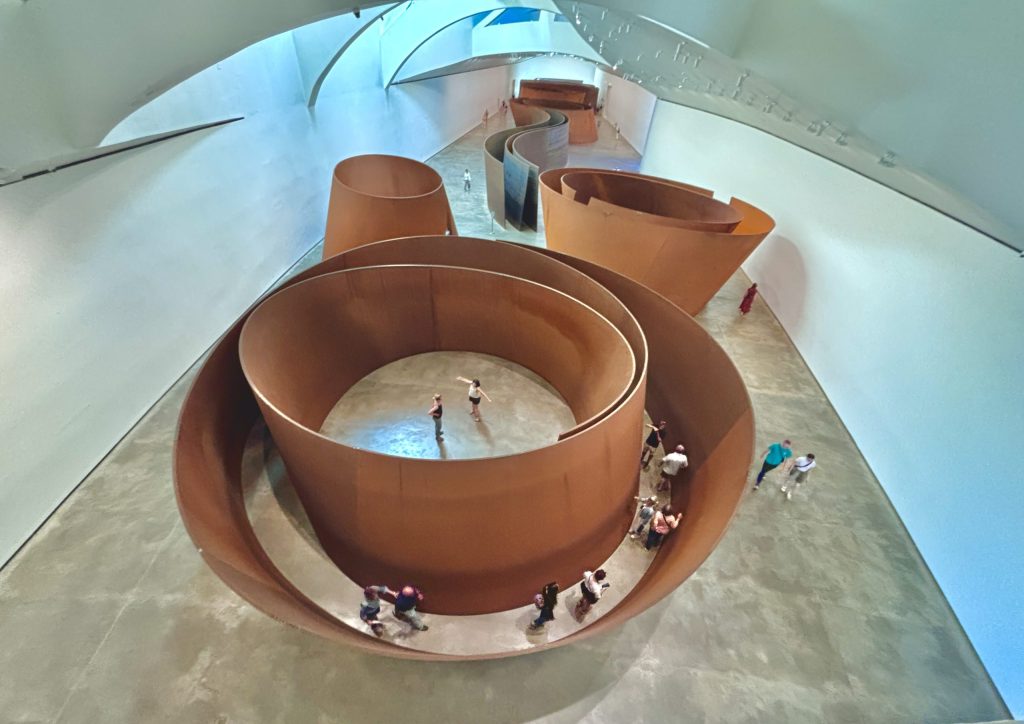
There are several more of these steel structures with different shapes and stories. At the end there was a video showing the shaping of the steel plates on a giant press that may have been used to make steel forms for ships or other large structures. Besides being beautiful it paid homage to Bilbao’s history.

The main traveling expedition was a retrospective on an American painter name Jasper Johns. There were well over 100 of his paintings and sculptures displayed. It is obvious that he was a very talented artist. The paintings were interesting and the craft that went into the execution was superb. I enjoyed exploring his works though they did not capture my imagination.
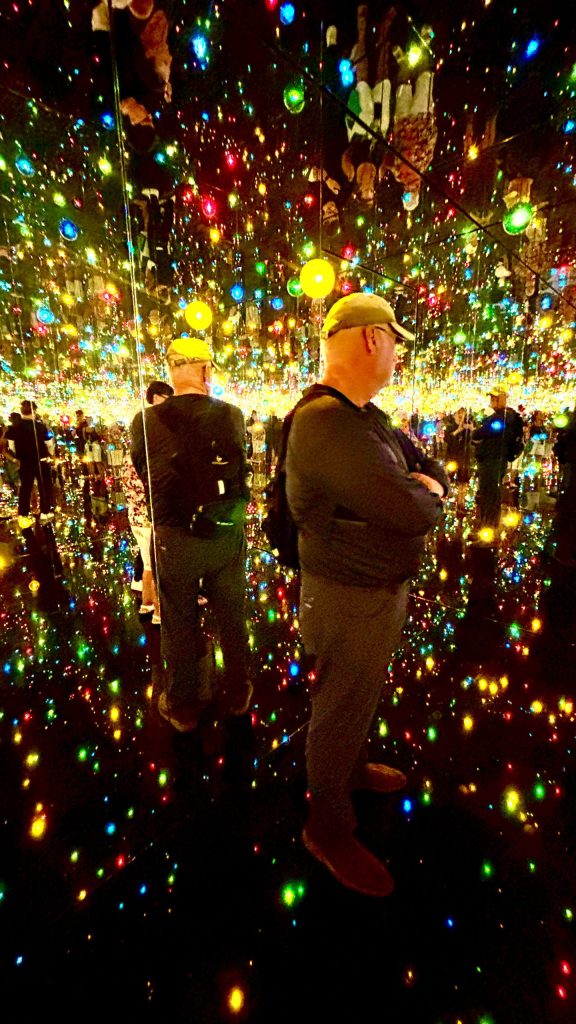
We spent several hours going through the museum. It is an amazing place and is now visited by millions of people each year. The museum did put Bilbao on the map as more than a steel town.

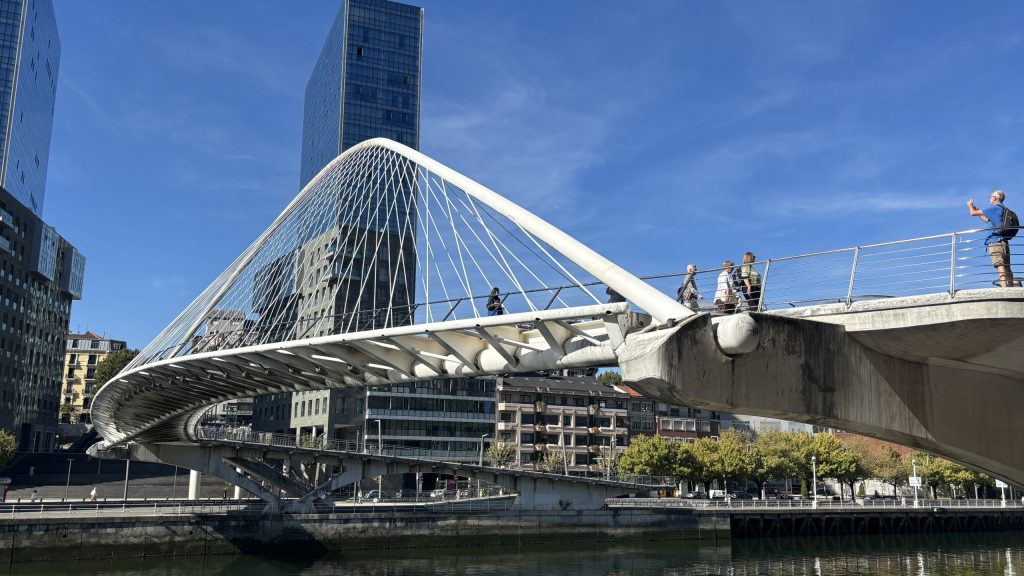
On the way to the museum we intentionally took a long walk along the Nerbioi River that splits the old town, and the Abando district. As we spent more time strolling along the river the town won me over.

The walk convinced me that my negative impression of the city yesterday was wrong. The longer we walked the more charmed I became. What I really liked was how well blended different architectural styles and eras were blended together. It was not a monolithic city but one with a fun diversity of styles.
After the Guggenheim we had some more excellent Pinxtos at a nice old bar in the commercial district of the city. Ton has been trying to find Txangurro crabs since we arrived in Basque country. Today we finally did and the Pinxto made from them was delicious.